How to Set Up and Use Grid Trading Bots on Binance and OKX
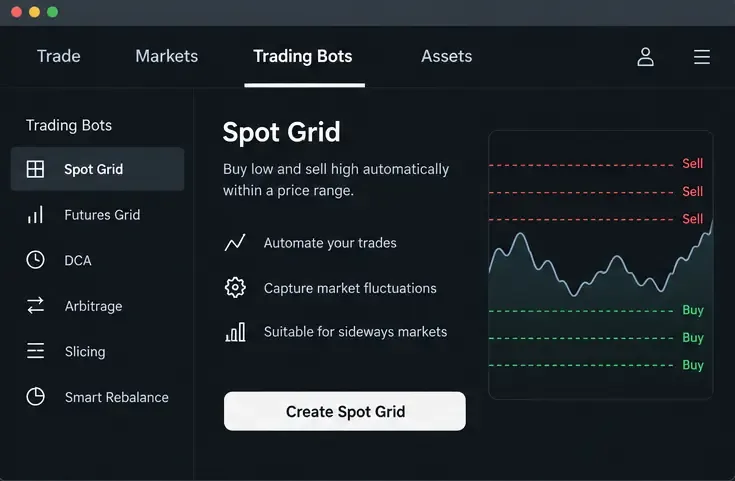
Learn how spot grid bots work, then set up and manage one on Binance or OKX with beginner-friendly parameters, risk checks, and exit steps.
Meme coins often move on attention before they move on fundamentals. A burst of posts on X (formerly Twitter), a fast-growing Telegram channel, a flood of memes, or a rumor repeated across multiple accounts can create the appearance of unstoppable momentum. Sometimes that attention reflects genuine organic interest. Sometimes it is coordinated promotion. And sometimes it is part of a pump-and-dump scheme designed to attract late buyers into a thin market.
The practical goal of social-sentiment tracking is therefore not to predict the next pump with certainty. It is to separate organic attention, coordinated hype, and market confirmation well enough to make a more informed decision. Social data is useful when it is treated as one input among several—not as a buy signal by itself.

Meme coins are especially sensitive to attention because many have limited historical data, relatively small market capitalizations, concentrated ownership, or thin liquidity. In that environment, a relatively small amount of new demand can move price sharply. Social media can accelerate that demand by exposing the same narrative to many traders within minutes.
X is built to surface emerging conversations. Its official documentation explains that Trends are intended to identify topics that are popular now, rather than subjects that have simply been popular for a long time. X also says its recommendation systems use signals such as follows, likes, reposts, replies, watched media, network activity, recency, and engagement. See the platform's own explanations of how X Trends are detected and ranked and how recommendations work on X.
Telegram works differently. Public channels are designed for broadcasting to large audiences, can have unlimited subscribers, and give each channel post a view counter. That makes Telegram well suited to rapid one-to-many distribution of token announcements, contract addresses, memes, calls to action, and trading narratives. Telegram documents those mechanics in its Channels FAQ and channel API documentation.
| Signal | X / Twitter | Telegram | What it may tell you |
|---|---|---|---|
| Mention velocity | Posts, replies, reposts, hashtags | Message frequency, repeated token references | Whether attention is accelerating |
| Audience spread | Number and diversity of independent accounts | Number of channels or groups discussing the token | Whether hype is broad or confined to one community |
| Engagement quality | Replies, reposts, quote posts, conversation depth | Views, reactions, forwards, discussion activity | Whether people are interacting rather than merely seeing a post |
| Account quality | Account age, history, network, repeated behavior | Channel history, admin behavior, message archive | Whether the source appears established or disposable |
| Narrative consistency | Same claim repeated across accounts | Same wording or call to action across channels | Possible coordination |
| Market confirmation | Compare social activity with volume, liquidity, spreads, holder concentration, and on-chain transfers | Whether attention is accompanied by real trading activity | |
A token with 20,000 mentions today may sound more important than one with 3,000 mentions, but the change in rate can be more informative. If a coin normally receives 200 mentions per hour and suddenly receives 2,000, the acceleration deserves attention. A high absolute count that has been stable for weeks is less informative about a fresh momentum event.
Track the change across comparable windows: for example, the latest hour versus the previous hour, or the latest six hours versus the preceding six. The exact threshold should depend on the token's normal baseline rather than on a universal number.
Ten thousand posts can originate from a narrow cluster of accounts copying the same message. That is different from hundreds of unrelated users discussing the asset independently. The broader the source diversity, the stronger the evidence that a narrative has escaped its original promotional circle.
Useful checks include account age, prior posting history, whether accounts mainly repost one another, and whether many posts appear within seconds using near-identical language.
Raw likes are easy to misread. Replies that contain questions, disagreement, analysis, screenshots of transactions, or independent discussion usually provide more information about real audience participation than a large block of low-effort reactions.
X's own search documentation shows why this distinction matters: its ranking systems use multiple engagement, health, relevance, author, network, recency, and spam-related signals rather than treating one metric as definitive. The platform describes these factors in its Search Recommendations documentation.
A meme coin narrative becomes more interesting when it appears independently across X, Telegram, on-chain activity, and market data. But cross-platform repetition is not automatically independent confirmation. Coordinated promoters can deliberately seed the same story in several places.
The better question is: did the narrative spread through different communities, or did one source simply get copied everywhere?
A common pattern begins with a low-liquidity asset receiving a concentrated burst of promotion. Early participants buy first. The initial price rise then becomes social proof: screenshots of green candles circulate, mentions increase, and new buyers arrive because the token now looks “hot.” Price gains generate more posts, and the posts generate more demand—a feedback loop.
Academic research has documented this type of coordination. A study on cryptocurrency manipulation across social media found that Twitter and Telegram were used around pump-and-dump activity and observed increased bot activity during pump attempts. The research is available from the authors via Identifying and Analyzing Cryptocurrency Manipulations in Social Media.
Another peer-reviewed study, Detecting cryptocurrency pump-and-dump frauds using market and social signals, found that Telegram and other social platforms were used to organize pumps. Importantly, the researchers also found that market signals were stronger predictive inputs than administrative social signals in their detection framework. That is a useful reminder: social excitement without corresponding market evidence is weak evidence.
The U.S. Commodity Futures Trading Commission specifically warns users not to buy digital tokens based on social-media tips or sudden price spikes and notes that pump-and-dump schemes can target thinly traded or newer coins. Its customer advisory on virtual-currency pump-and-dump schemes remains a useful reference.
You do not need a complicated sentiment score to improve your process. A simple framework is often more robust because it forces you to verify the source of the activity.
Record the token's typical mention count, active posters, average Telegram message frequency, trading volume, liquidity, and volatility during a quiet period. Without a baseline, almost any number can look impressive.
Look for changes in mentions, unique posters, reposts, channel views, forwards, and message frequency. Focus on growth rates and unusual deviations rather than isolated totals.
Separate established accounts, project-affiliated accounts, influencers, bots, fresh accounts, and ordinary community members. If most activity comes from one tightly connected cluster, lower your confidence that the trend is organic.
If people claim a centralized exchange listing, partnership, product launch, token burn, or protocol integration, verify it directly with the exchange, partner, project documentation, or relevant on-chain transaction. Repetition is not evidence.
Check whether trading volume is actually rising, whether liquidity is deep enough to enter and exit without extreme slippage, whether spreads are widening, and whether large holders are transferring tokens to exchanges or liquidity pools.
Organic trends can continue to produce varied discussion after the initial burst. Coordinated campaigns often decay sharply once the scheduled promotional window ends. A collapse in unique participation while price remains elevated is a warning sign.
| Pattern | Possible interpretation | What to verify next |
|---|---|---|
| Mentions up, volume flat | Attention without strong market participation | Source quality, bot activity, liquidity |
| Mentions and volume rise together | Social interest is reaching the market | Holder concentration, sustainability of volume |
| Telegram explodes before X | Community or coordinated group may be leading the move | Message history, admin calls, on-chain accumulation |
| X spikes before Telegram | Public narrative may be spreading outward | Independent posters, trending mechanics, news source |
| Price rises before social activity | Early accumulation or an external catalyst may precede attention | Large-wallet activity, official announcements |
| Price falls while hype rises | Late buyers may be meeting distribution | Exchange inflows, whale selling, liquidity changes |
Sentiment analysis has several structural limits. Sarcasm and memes are difficult to classify. A post can be positive in tone but negative in trading intent—for example, a holder promoting a token while preparing to sell. Bots can inflate apparent enthusiasm. Private Telegram groups may be invisible to public data collection. Deleted posts and edited narratives can distort retrospective analysis.
Most importantly, correlation is not causation. A surge in posts may drive buying, but it may also be a reaction to a price move that already happened. In many cases the relationship works both ways.
Regulators continue to warn that social-media and messaging-group investment scams can create convincing false consensus. In December 2025, the SEC described a case in which retail investors were allegedly drawn in through social media and group chats before being directed to purported crypto trading platforms. The SEC's release also emphasized not relying solely on group-chat information when making investment decisions. See the SEC's December 22, 2025 enforcement release.
X and Telegram can help explain why a meme coin suddenly becomes visible. X can rapidly amplify emerging conversations through recommendations, Trends, reposts, and network effects. Telegram can move information through large channels and tightly connected communities with very little delay. Together they can create a powerful attention loop.
But social sentiment is most useful when it answers where attention is coming from, how quickly it is spreading, and whether independent participants are joining. It becomes dangerous when a trader treats popularity as proof of value.
The strongest practical approach is to pair sentiment with market structure and on-chain evidence. If social activity, unique participation, volume, liquidity, and verifiable news all strengthen together, the signal is more credible. If the story is being pushed by a narrow cluster of accounts while liquidity is thin and price has already gone vertical, the same social data may be warning you about a pump rather than inviting you into one.
Learn how spot grid bots work, then set up and manage one on Binance or OKX with beginner-friendly parameters, risk checks, and exit steps.
Compare five free crypto token scanners for honeypots, scam signals, smart-contract vulnerabilities, holder risks, and token security before you trade.
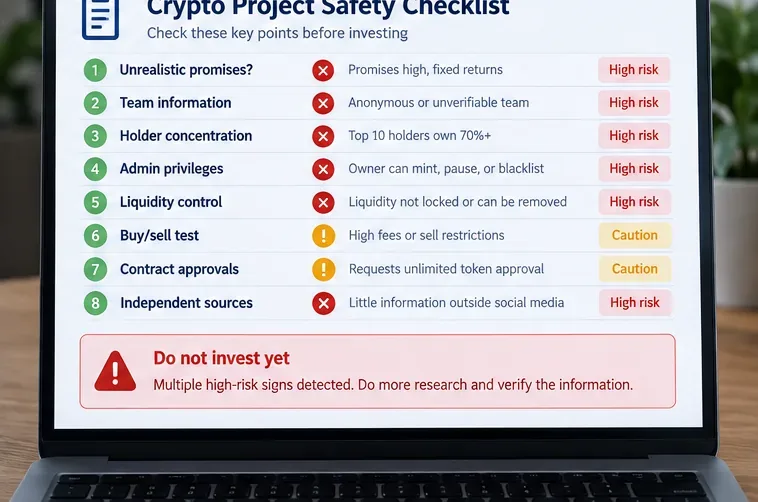
Learn how to spot crypto rug-pull warning signs before buying: hype, team transparency, holder concentration, admin powers, liquidity, sell restrictions, and wallet approvals.
Learn how X (Twitter) and Telegram can amplify meme coin momentum, which social signals matter, how to spot coordinated hype, and how to avoid pump-and-dump traps.
Learn how Coinbase Advanced Trade works in 2026, from choosing a market and reading the order book to placing market, limit, stop-limit, and bracket orders.
Compare crypto day trading and swing trading by time, risk, costs, leverage, and discipline to choose a strategy that fits your schedule.
Learn how to screen low-cap crypto projects using market cap, FDV, liquidity, tokenomics, unlocks, contract permissions, catalysts, and risk controls.
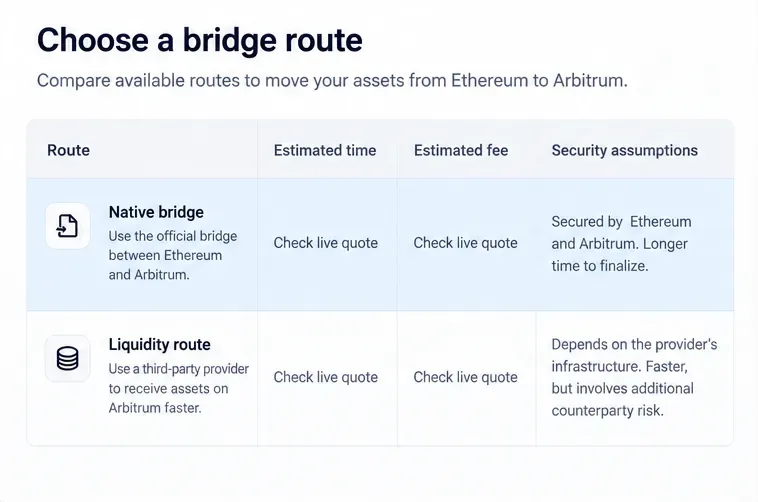
Learn how crypto bridges move assets across blockchains, how to compare routes, verify tokens, manage gas and approvals, and reduce common bridging risks.
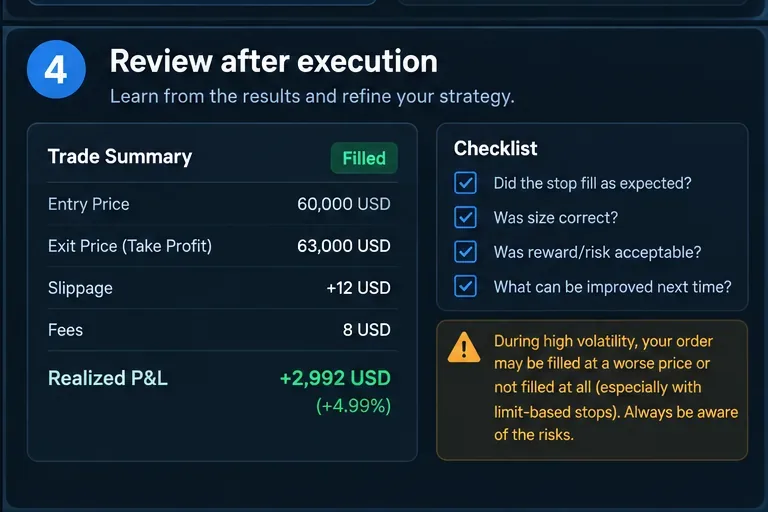
Learn how to place stop-loss and take-profit orders around trade invalidation, position size, volatility, and execution risk instead of relying on arbitrary percentages.
Learn how to stake crypto on Kraken, compare Flexible and Bonded staking, understand rewards and commissions, and avoid common staking mistakes.