How to Set Up and Use Grid Trading Bots on Binance and OKX
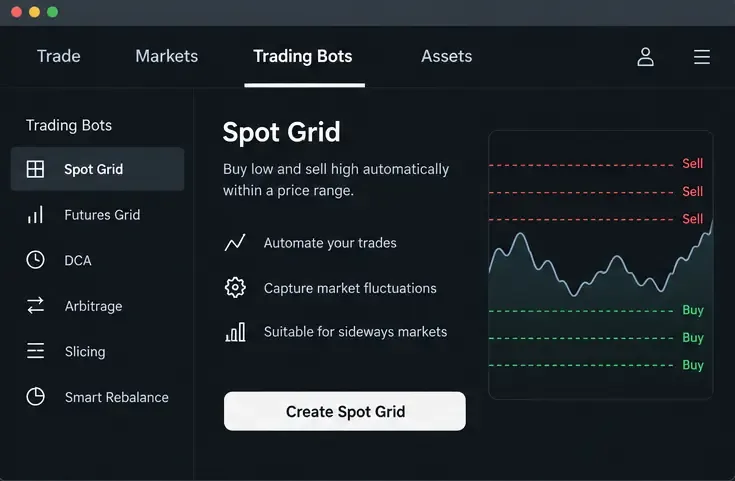
Learn how spot grid bots work, then set up and manage one on Binance or OKX with beginner-friendly parameters, risk checks, and exit steps.
Finding a new token before it becomes widely known can feel exciting, but a chart and a busy social feed tell you almost nothing about whether the contract is safe to interact with. A useful first line of defense is to run the token through several independent security tools and compare what they detect.
This guide uses one clearly labeled hypothetical example throughout: imagine a fictional token called HarborMoon (HBM) on Base, with a made-up contract address such as 0xABCD...1234. HarborMoon does not represent a real project, and the results described below are examples only. They are not test results, endorsements, or claims about any actual token.
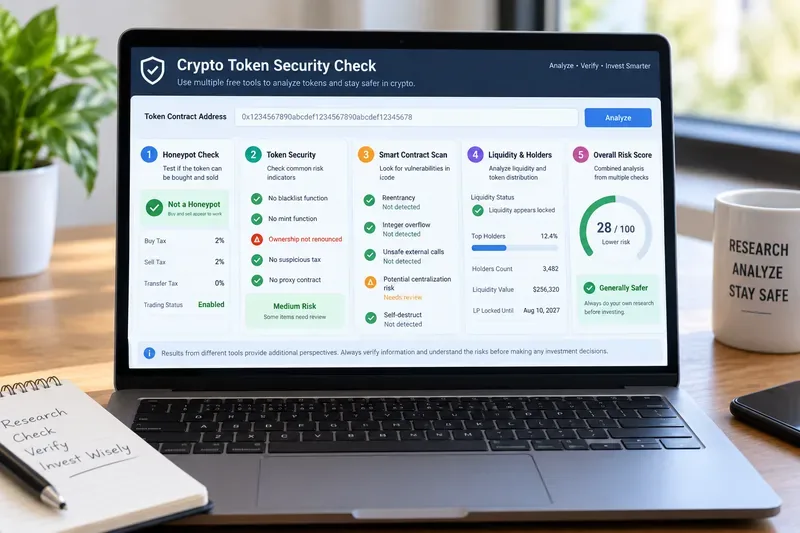
The goal is not to obtain one reassuring green score. The goal is to answer several different questions: Can the token be sold? Can an owner mint more supply or block transfers? Is the source code verified? Are there dangerous privileged functions or known vulnerability patterns? Is liquidity unusually fragile? Is ownership concentrated? Do multiple independent tools point to the same concern?
A scanner can reduce uncertainty, but it cannot prove that a token is legitimate. Automated tools can miss newly invented exploits, governance abuse, compromised websites, stolen private keys, malicious upgrade paths, or off-chain fraud. A contract that looks technically clean can still be attached to a dishonest project. Conversely, a warning can sometimes reflect an intentional design choice rather than an exploit. Treat scanner output as evidence to investigate, not as a certificate of safety.
| Tool | Best for | Useful signals | Main limitation |
|---|---|---|---|
| Token Sniffer | Fast first-pass scam screening | Automated scam detection, contract auditing, risk analysis | A score alone should not replace reviewing the underlying warnings |
| GoPlus Security | Detailed token-risk data and API access | Token security, malicious addresses, approvals, transaction simulation | Its many fields can be overwhelming without context |
| Honeypot.is | Testing whether a token can be bought and sold | Honeypot checks, taxes, gas estimates, pair and holder data | Passing a honeypot simulation does not establish overall project safety |
| De.Fi Scanner | Smart-contract vulnerability review | Security score, vulnerability findings, token holder and liquidity analysis | Automated analysis cannot substitute for a full manual audit |
| SolidityScan QuickScan | Code-level threat and rug-pull screening | Security score, threat score, vulnerability detection | Coverage depends on supported chains, verified code, and scanner scope |
Availability and limits can change. The descriptions below were checked against official product or documentation pages on September 16, 2026.
Token Sniffer, operated as part of Solidus Labs' technology, describes itself as a free tool for automated scam detection, contract auditing, and risk analysis. Its official site currently says it supports 15 chains.
For the fictional HarborMoon token, Token Sniffer would be a sensible place to start because it can quickly surface broad risk indicators. Imagine the report shows that trading is possible but flags a privileged ownership function. That would not automatically mean HarborMoon is a scam. It would mean you now have a concrete question: What can the owner still change, and under what conditions?
Quality check: do not stop at the overall score. Open the individual findings and distinguish between structural red flags and lower-severity notices. If the contract is unverified or the scanner cannot inspect important logic, the absence of warnings is much less meaningful.
GoPlus Security provides token-security data along with malicious-address, approval, dApp, phishing, and transaction-simulation services. Its official pricing page lists a free API tier, and its documentation describes the Token Security API as a real-time automated security-detection service.
In our HarborMoon example, suppose Token Sniffer raised an ownership concern. A GoPlus check could provide a second perspective on characteristics such as source-code status, minting or blacklist behavior, owner-related controls, transfer restrictions, and other token-specific risk fields where available. The practical value is not that GoPlus “votes” on the token. It is that you can compare its data with the first scanner.
If two tools independently indicate that the owner can change important trading behavior, that deserves more attention than a cosmetic warning seen in only one interface. If the tools disagree, investigate why rather than choosing the result you prefer.
Developers can consult the official GoPlus API overview for current endpoints and supported security categories.
A honeypot token is designed or configured so users can buy but cannot successfully sell, or selling is made economically impractical. Honeypot.is offers a public API and documentation for honeypot checks. Its official docs say API authentication is currently not required and describe outputs including honeypot status, taxes, gas, contract, pair, and top-holder information.
Return to HarborMoon. Imagine the token passes the honeypot simulation and shows ordinary-looking buy and sell taxes. That is useful, but it answers only a narrow question: the simulated trade path did not behave like a honeypot under the conditions checked. It does not prove that the owner cannot later change fees, blacklist addresses, upgrade a proxy, remove liquidity, or exploit some unrelated flaw.
A good outcome here is therefore not “Honeypot.is says safe.” A better conclusion is: “No honeypot behavior was detected in this check; continue with contract and control-risk analysis.”
De.Fi Scanner is designed to analyze smart contracts across multiple supported blockchains. Its documentation says the scanner checks a broad set of exploit and vulnerability patterns, provides a security score, and lists detailed findings. For token contracts, it can also provide holder or liquidity analysis when data is available.
Suppose HarborMoon passed the honeypot test, but De.Fi identifies a privileged function that could materially affect users. This is exactly why using more than one scanner matters. Trading successfully today does not eliminate the possibility of future administrative actions.
When reviewing De.Fi results, look beyond severity labels. Ask whether the flagged function is reachable, who controls it, whether the contract is upgradeable, and whether protective controls such as a timelock or multisig exist. Those questions often matter more than a single numerical score.
SolidityScan QuickScan is presented by its provider as a free threat scanner and rug-pull detector. The service displays separate security and threat-oriented scores for scanned contracts, while the broader SolidityScan platform focuses on identifying smart-contract vulnerabilities. Its official pricing page also lists a trial with free scans for the more extensive scanning product.
For HarborMoon, this is a useful final automated cross-check. Imagine QuickScan flags a code pattern that the earlier tools did not emphasize. You should not assume the other scanners are wrong; different products use different detectors, heuristics, data sources, and scoring systems. Read the finding, determine whether it applies to the deployed contract, and compare it with the contract's verified source and any independent audit.
The fictional HarborMoon example illustrates a practical workflow: begin with a broad scam scan, verify tradeability, inspect token-specific privileges, then examine deeper code and liquidity or holder risks. The value comes from agreement and explanation, not from collecting five green badges.
There is no universal rule, but some findings should raise the threshold for proceeding. Examples include inability to sell, unverified or inaccessible contract logic, unexplained mint authority, arbitrary blacklist or transfer controls, owner powers that can change fees dramatically, upgradeability controlled by a single wallet, severe vulnerability findings, or liquidity that can disappear immediately.
If you cannot explain a critical warning in plain language, the appropriate next step is usually more research rather than assuming it is harmless. The same applies when a project's documentation conflicts with what the contract scanners show.
Automated token scanners mainly analyze code, on-chain configuration, known behavior patterns, and available market or holder data. They generally cannot verify whether a team's claims are truthful, whether a social-media account is compromised, whether a front end will later be replaced with malicious code, or whether private keys will be stolen. They also cannot guarantee that every newly discovered vulnerability has been modeled.
That limitation matters because “no issue detected” is not the same statement as “no issue exists.” Security is strongest when automated scanning is combined with contract verification, independent audits where appropriate, wallet hygiene, cautious approvals, and skepticism toward urgency-based marketing.
For a free pre-trade screening stack, Token Sniffer is useful for a fast broad check, GoPlus adds detailed token-risk intelligence, Honeypot.is focuses on tradeability and honeypot behavior, De.Fi Scanner adds contract and vulnerability context, and SolidityScan QuickScan provides another code-focused threat perspective. Their overlap is a feature, not wasted effort.
If our fictional HarborMoon token passed every scanner, the correct conclusion would still be modest: the automated checks did not identify certain known risks at the time they were run. That is much more defensible than calling the token “safe.” Use the tools to decide what to investigate next, and increase the depth of your due diligence as the amount at risk grows.
Learn how spot grid bots work, then set up and manage one on Binance or OKX with beginner-friendly parameters, risk checks, and exit steps.
Compare five free crypto token scanners for honeypots, scam signals, smart-contract vulnerabilities, holder risks, and token security before you trade.
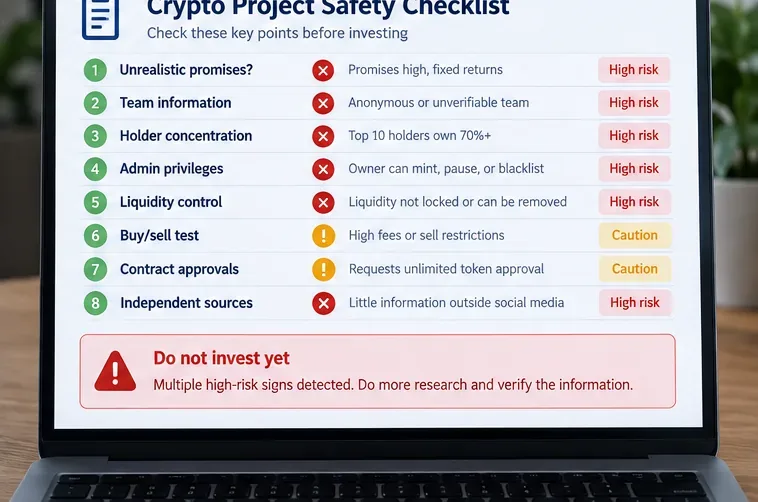
Learn how to spot crypto rug-pull warning signs before buying: hype, team transparency, holder concentration, admin powers, liquidity, sell restrictions, and wallet approvals.
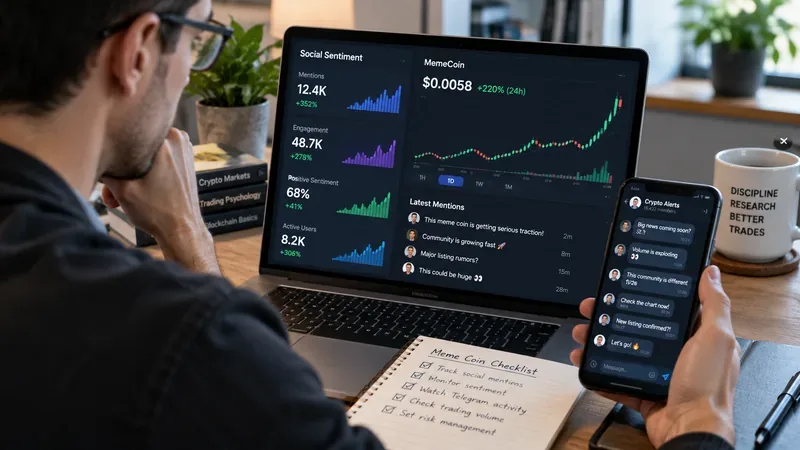
Learn how X (Twitter) and Telegram can amplify meme coin momentum, which social signals matter, how to spot coordinated hype, and how to avoid pump-and-dump traps.
Learn how Coinbase Advanced Trade works in 2026, from choosing a market and reading the order book to placing market, limit, stop-limit, and bracket orders.
Compare crypto day trading and swing trading by time, risk, costs, leverage, and discipline to choose a strategy that fits your schedule.
Learn how to screen low-cap crypto projects using market cap, FDV, liquidity, tokenomics, unlocks, contract permissions, catalysts, and risk controls.
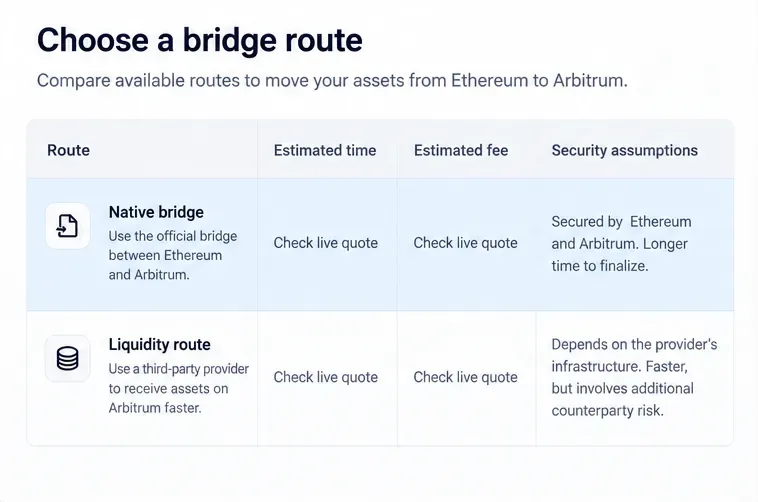
Learn how crypto bridges move assets across blockchains, how to compare routes, verify tokens, manage gas and approvals, and reduce common bridging risks.
Learn how to place stop-loss and take-profit orders around trade invalidation, position size, volatility, and execution risk instead of relying on arbitrary percentages.
Learn how to stake crypto on Kraken, compare Flexible and Bonded staking, understand rewards and commissions, and avoid common staking mistakes.