Home
» Knowledge
»
When to Take Profits on Meme Coins Before the Bubble Bursts
When to Take Profits on Meme Coins Before the Bubble Bursts
Meme coins can rise faster than almost any other corner of the crypto market, but that same speed makes exits difficult. The practical problem is not identifying the exact top. It is deciding, before emotion takes over, how much profit you are willing to lock in as prices accelerate and how much risk you are willing to leave on the table.
That approach matters because the basic characteristics of meme coins have not changed. In its February 27, 2025 staff statement, the U.S. Securities and Exchange Commission described the types of meme coins covered by the statement as assets whose value is driven primarily by market demand and speculation and that often have limited or no utility. The statement also emphasized their significant price volatility. The SEC staff view was not a rule and did not cover every token labeled a meme coin, but it remains a useful reminder that price may depend more on sentiment than on cash flow or other conventional valuation anchors. See the SEC staff statement on meme coins.
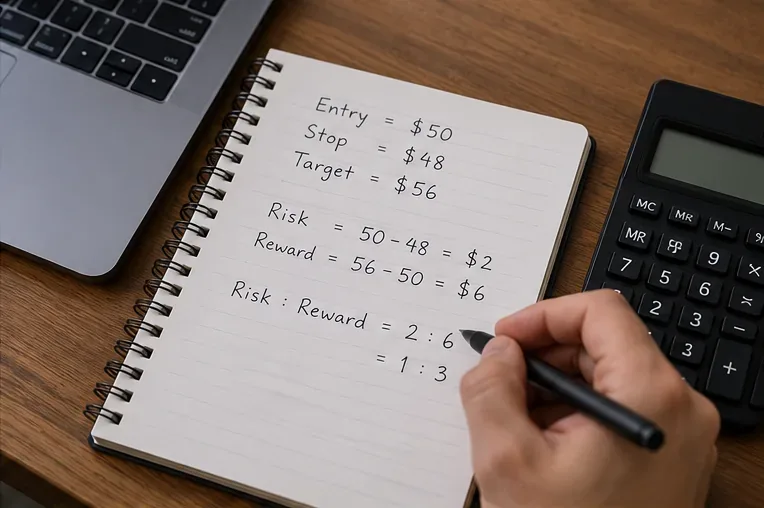
A written exit plan can help a trader make decisions before a fast-moving meme-coin rally turns into a sharp reversal.
The best time to take profits is before you feel certain the rally will continue
When a meme coin is rising rapidly, confidence often grows at the same time as risk. Traders may start treating a temporary gain as if it were already permanent, move their targets higher, or decide to wait for “just one more leg up.” That is exactly when an exit plan becomes useful.
A reasonable framework is to take profits in stages rather than trying to sell everything at one perfect price. For example, a trader might sell a portion after a predefined gain, another portion if the token reaches a second target, and keep a smaller remainder only if they are comfortable losing much of that remaining value. The percentages and thresholds should come from the trader’s own risk tolerance, entry price, liquidity conditions, and tax situation—not from a universal formula.
Five signals that it may be time to reduce a meme-coin position
1. The position has grown much larger than you originally intended
Suppose you bought a meme coin as a small speculative position, but a rapid rally makes it one of the largest assets in your portfolio. Even if the thesis has not changed, your risk has. A single reversal can now have a much larger effect on your overall finances.
One useful trigger is portfolio concentration. If the position becomes large enough that a 50% or 80% decline would materially change your financial plans, taking some profit can restore the risk level you originally intended.
2. Price is moving vertically while the story is getting weaker
Sharp rallies are not automatically bubbles, but a near-vertical move accompanied by increasingly vague claims, recycled social-media posts, or promises of guaranteed upside deserves caution. The Commodity Futures Trading Commission has specifically warned against buying digital tokens based on social-media tips or sudden price spikes and notes that pump-and-dump schemes can occur in thinly traded or newer tokens. In one example described by the agency, the buy-and-sell cycle was over in less than eight minutes. See the CFTC advisory on virtual-currency pump-and-dump schemes.
If the reason you are still holding is no longer “this meets my plan” but “everyone online says it will keep going,” that is a strong cue to review the position.
3. Liquidity is thinning even though the displayed price is still high
A quoted market price does not guarantee that you can sell a large position near that price. Meme coins can trade across fragmented venues, decentralized exchanges, or pools with limited depth. When liquidity is thin, a large market order may suffer substantial slippage. In extreme cases, apparent gains can disappear during the attempt to exit.
Before relying on the headline price, look at order-book depth or pool liquidity, recent trade size, spreads, and the price impact of your intended sale. If the market cannot absorb your planned exit without a large discount, the real value of the position may be lower than the screen suggests.
4. Your original profit target has already been reached
This sounds obvious, but it is one of the most common moments when discipline breaks down. A trader sets a target at entry, the token reaches it, and then the target is moved higher because the rally feels unusually strong.
Changing a plan is not always wrong. The important question is whether the change is based on new information or simply on greed and fear of missing more upside. If there is no new evidence, honoring the original target is often more consistent than inventing a new target after the price has already surged.
5. You would not buy the same amount at today’s price
A simple test is to ignore your entry price for a moment. If you had cash instead of the token today, would you willingly buy the same dollar amount at the current market price? If the answer is no, your current position may be larger than your present conviction justifies.
This does not mean you must sell everything. It does mean the decision should be reconsidered using today’s information rather than the emotional attachment created by an earlier entry.
A practical staged profit-taking framework
There is no single exit schedule that fits every trader, but a staged framework can make the decision process more concrete. The example below is illustrative only.
Stage
What you decide in advance
Purpose
Initial de-risking
Sell a small portion after a predetermined gain or when the position becomes too concentrated
Reduce exposure while keeping upside participation
Second profit target
Sell another portion if price reaches a higher objective
Convert more unrealized profit into realized profit
Momentum breakdown
Reduce further if price breaks a level you defined before the rally
Avoid giving back most of a large gain
Residual position
Keep only an amount you are genuinely willing to see fall sharply
Maintain optional upside without putting the full gain at risk
The key is that the rules are written before the market becomes chaotic. Your thresholds can be based on percentage gains, portfolio weight, price structure, volatility, or a combination of these factors. What matters is consistency.
Do not confuse a stop-loss with guaranteed execution
Stops can be useful, but they do not guarantee an exit at the trigger price. In a fast collapse, the next available trade may occur far below your stop. This risk can be more severe in meme coins because volatility and liquidity can change suddenly.
Limit orders reduce price uncertainty but create a different problem: they may never fill. Market orders prioritize execution but can produce large slippage. Traders should understand the trade-off before choosing an order type.
Watch for the difference between volatility and manipulation
Not every rapid rise and fall is manipulation. Meme coins can move violently simply because speculative demand changes. However, some patterns deserve extra caution: coordinated countdowns to buy, anonymous groups promising a pump, fabricated partnership claims, sudden influencer campaigns, or pressure to buy immediately.
The CFTC advises investors not to purchase digital coins based on a single social-media tip and not to participate in pump-and-dump trades. Its broader digital-asset guidance also stresses that there is no widely accepted standard for valuing many digital tokens. See the CFTC guidance on buying digital coins and tokens.
Taxes can change what “taking profit” actually means
For U.S. taxpayers, selling a digital asset for dollars is generally a taxable disposition, and exchanging one digital asset for another can also trigger a reportable gain or loss. The IRS treats digital assets as property and says that capital gains or losses generally apply when a person sells or disposes of a digital asset held for investment. Holding period matters: assets held for one year or less are generally short-term, while assets held for more than one year are generally long-term. See the IRS digital-assets guidance and the IRS digital-asset transaction FAQs.
This means a trader should not assume that the cash received after a sale is entirely available to spend. Keeping records of cost basis, transaction fees, dates, proceeds, and wallet or exchange activity is important. Tax rules vary by country, so traders outside the United States should check the rules that apply where they live.
What not to use as your only exit signal
A round-number price target: Popular targets can become crowded and may have no connection to liquidity or market structure.
Influencer predictions: A public prediction does not reveal the speaker’s actual position, cost basis, or exit plan.
Market-cap comparisons alone: Comparing one meme coin with another can ignore differences in supply, liquidity, token distribution, and market conditions.
“It already fell too much to sell”: A large decline does not guarantee a rebound. The relevant question is whether the remaining risk still fits your plan.
Trying to recover the maximum possible profit: Once the market has reversed, the highest unrealized value is no longer available. Decisions should be based on current conditions, not on the peak shown in hindsight.
A simple pre-trade checklist
Before buying a meme coin, write down the answers to these questions. Doing this before the trade is easier than answering them during a 30% daily move.
How much can I lose without affecting essential savings or obligations?
At what profit level will I sell the first portion?
What portfolio weight would make this position too large?
What price or market condition would invalidate my reason for holding?
How liquid is the token on the venue I plan to use?
What taxes or reporting obligations could result from selling or swapping?
How much, if any, am I willing to keep as a high-risk residual position?
The goal is not to sell at the top
No reliable method can identify the exact moment a meme-coin bubble will burst. The more realistic objective is to avoid allowing an exciting unrealized gain to become a loss because you had no exit rules.
Taking profits gradually, monitoring concentration and liquidity, recognizing hype-driven risk, and accounting for taxes are all ways to make the decision process less dependent on emotion. You may sell too early and watch the token keep rising. You may also keep a small position that later falls sharply. Both outcomes can still be consistent with a sound plan if the risk was chosen deliberately.
Meme coins are speculative assets, and losses can be substantial. The most defensible profit-taking strategy is therefore one that you can define in advance, execute under pressure, and live with even if the market continues moving after you sell.