Home
» Project analysis
»
Low Market Cap Gaming Cryptos: 6 Web3 Projects Worth Researching in 2026
Low Market Cap Gaming Cryptos: 6 Web3 Projects Worth Researching in 2026
Gaming crypto has become harder to evaluate in 2026 because the strongest projects no longer fit one simple “play-to-earn” template. Some run full games, some provide gaming blockchains, and others are evolving toward AI, digital collectibles, or broader consumer infrastructure. That is good for product experimentation—but confusing for a beginner trying to identify low market cap gaming cryptos without buying a token simply because its price looks cheap.
The practical solution is to start with the game or network, then work backward to the token. Ask whether people can use the product today, whether the token has a necessary role, whether supply is still being unlocked, and whether the project is still genuinely focused on gaming. Only after those checks should market capitalization influence the decision.
This article uses “low market cap” in a relative sense: smaller gaming tokens that are less dominant than the sector’s largest networks and may offer higher upside if adoption accelerates. Because market capitalization changes every minute and project websites generally do not publish an authoritative live market-cap figure, the projects below are not ranked by a fixed dollar valuation. Verify current circulating supply, price, liquidity, and fully diluted valuation immediately before making any investment decision.
A beginner researching small-cap gaming crypto should evaluate the game, community, token utility, supply, and liquidity before focusing on upside potential.
First, what is a gaming crypto?
A gaming crypto is a blockchain-based token connected to a video game, gaming platform, virtual economy, or gaming-focused network. Depending on the project, the token may pay transaction fees, purchase in-game items, reward players, secure a blockchain, participate in governance, or provide access to ecosystem services.
You will also see the term GameFi, which combines “gaming” and “decentralized finance.” GameFi usually refers to games where digital assets have blockchain-based ownership or economic functions. Another common term is NFT, or non-fungible token, which represents a unique digital asset such as a character, skin, land parcel, or collectible.
None of these features automatically make a game valuable. A good Web3 game still has to compete for players’ limited time against traditional games that may have better graphics, deeper gameplay, or stronger communities.
Before looking for gems, learn market cap and FDV
Market capitalization is generally calculated as the token price multiplied by the circulating token supply. A token can appear “cheap” at $0.05 while still having a large market cap if billions of tokens are already circulating.
Fully diluted valuation, or FDV, estimates the value of the token if the entire maximum or eventual supply were circulating at the current price. The gap between market cap and FDV matters because future token unlocks can dilute existing holders.
For example, imagine two fictional gaming tokens:
Token
Circulating Supply
Maximum Supply
Price
What a beginner should notice
Game A
800 million
1 billion
$0.10
Most supply is already circulating, so future dilution is relatively limited.
Game B
100 million
2 billion
$0.10
Only a small portion is circulating; future unlocks could be substantial.
The token price is identical, but the supply structures are completely different. That is why “under $1” is not a useful definition of a low-cap gem.
What should a beginner prepare before researching gaming tokens?
You do not need advanced blockchain knowledge. You need a repeatable checklist and the discipline to use primary sources. For every project, locate its official website, current documentation or whitepaper, token contract address, tokenomics page, game client or product, and official roadmap or development updates.
Then answer five questions:
Can I play or use something now? A live product is easier to evaluate than a trailer.
Why does the token exist? Look for concrete functions such as gas, in-game purchases, staking, governance, or network security.
Who needs to buy the token? Rewards alone create supply; durable demand needs users, developers, validators, or customers.
How much supply is still coming? Check vesting schedules, emissions, treasury allocations, and incentives.
What would make the thesis fail? Weak retention, canceled games, declining development, token inflation, or a strategic pivot can all change the story.
Six smaller gaming cryptos to research in 2026
1. GUN: a gaming token tied to Off The Grid
GUN is unusually easy for a beginner to understand because it is connected to a visible consumer product. Gunzilla Games’ Off The Grid is a cyberpunk battle royale available in Early Access across PC and consoles. In May 2026, Gunzilla published an official roadmap and said the game was planned for full release around its second-anniversary window. The current milestone can be verified in Gunzilla Games’ 2026 roadmap announcement.
The GUN token powers parts of the game economy. Gunzilla states that it can be used for in-game items, asset trading, and blockchain-enabled interactions. In July 2025, the project also expanded GUN to Solana through a multichain strategy, described in the official GUNZ Solana announcement.
Why a beginner may watch it: the investment thesis can be tested against game adoption. If the full release expands active players and marketplace activity, token utility has a clearer path to growth.
Main mistake to avoid: assuming a successful game automatically creates a successful token. Players can enjoy a title without generating enough token demand to offset emissions, sellers, or speculative supply.
2. XAI: gaming infrastructure rather than one game
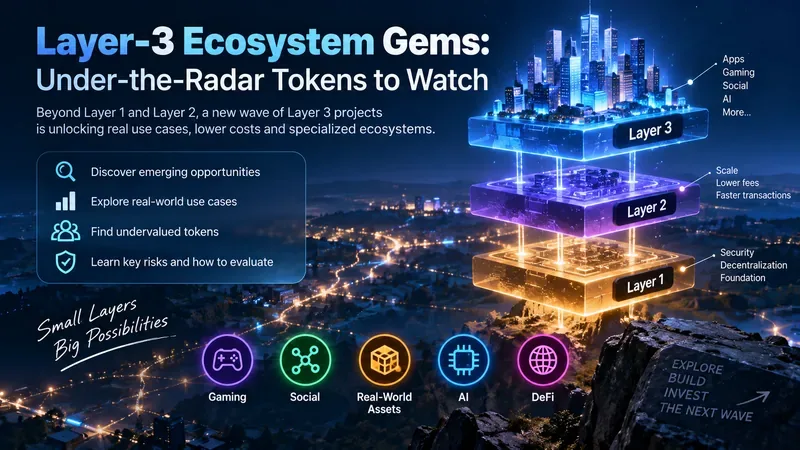
Xai is a Layer 3 blockchain built with Arbitrum technology and designed around games. A Layer 3 is an application-focused blockchain built on top of existing scaling infrastructure. Xai’s current official game directory includes titles such as Planet X, RIFTSTORM, Lost Glitches, Final Form, Tarochi, Tollan Universe, and others. You can review the current ecosystem on the official Xai games page.
Xai also offers onboarding tools such as social login, embedded wallets, gas subsidies, and developer SDKs. Its Xai Connect documentation shows the network’s effort to hide blockchain friction from ordinary players.
The token is also part of governance. The official Xai governance portal explains that XAI and esXAI contribute to governance voting power.
Why a beginner may watch it: XAI is a portfolio-style gaming thesis. Instead of betting on one title, you are partly betting on a network attracting multiple games and players.
Main mistake to avoid: counting announced games as successful games. Track launches, active communities, transaction activity, and player retention rather than the number of logos on an ecosystem page.
3. PIXEL: a live game with an evolving economic model
Pixels is a social farming and exploration game with blockchain-backed progression and digital ownership. Its official site says the ecosystem has reached more than 10 million players and continues to receive regular updates. That figure is project-reported rather than an independently audited active-user metric, so it should be interpreted accordingly. The product itself can be explored through the official Pixels website.
What makes PIXEL interesting for research is that the team publicly discusses the weaknesses of earlier play-to-earn economics. Its current whitepaper identifies problems such as coin inflation, inadequate resource sinks, and end-game limitations, then describes changes intended to improve the economic loop. Read the project’s own analysis in the PIXEL whitepaper section on gameplay economics.
PIXEL also supports staking and in-game utility. The project’s current token whitepaper emphasizes targeted rewards, player behavior data, and a broader publishing strategy rather than simple unlimited reward farming.
Why a beginner may watch it: Pixels offers something many gaming tokens lack: an existing game economy that can be observed and adjusted.
Main mistake to avoid: treating historical player registrations as current engagement. For gaming, retention and spending behavior matter more than cumulative sign-ups.
4. NAKA: a broad gaming platform with completed vesting according to its docs
Nakamoto Games takes a platform approach. Its official site says it offers more than 200 titles across multiple genres and uses NAKA across its play-to-earn ecosystem. Developers can also integrate the ecosystem through its tools and SDK. The current platform description is available from Nakamoto Games.
For token research, one detail is particularly useful: the project’s official tokenomics page states a maximum supply of 180 million NAKA and labels its vesting release as completed. It also publishes wallet allocations and the Polygon token contract. Verify the latest state in the official NAKA tokenomics documentation.
Why a beginner may watch it: completed vesting can reduce one category of future dilution risk compared with projects that still have major investor or team unlocks ahead—although ecosystem rewards, treasury holdings, and other circulating-supply changes still matter.
Main mistake to avoid: assuming “200 games” means 200 equally active communities. A platform should be judged by meaningful usage, player activity, developer adoption, and economic throughput.
5. MAGIC: a former gaming-metaverse token evolving toward AI-native entertainment
Treasure is a useful 2026 case study because categories change. MAGIC began as the native token of a gaming and metaverse ecosystem, but Treasure’s current documentation describes a broader “agentic universe” involving AI-native digital and physical collectibles. Its official MAGIC documentation says MAGIC is now used by agents to pay for compute and on-chain services and also functions as the ecosystem governance token.
Treasure’s current website highlights live products including Summon and Smol Clyde and states that the ecosystem is built around MAGIC. Review the latest positioning on the official Treasure site.
Why a beginner may watch it: MAGIC has an established history in Web3 gaming, but the current thesis is no longer simply “more games join Treasure.” It is becoming a hybrid bet on gaming, intelligent collectibles, autonomous agents, and interactive IP.
Main mistake to avoid: relying on an old thesis. If you bought MAGIC because you wanted pure gaming exposure, you should reassess whether the project’s new direction still matches that objective.
6. BEAM: a gaming-origin token that has broadened into frontier technology
Beam is another example of strategic evolution. It became known for a gaming-focused ecosystem, but its current 2026 positioning is much broader. The official Beam site now describes the organization as an innovation network spanning AI, trading, compute, blockchain applications, and venture activity, while BEAM remains the common ecosystem token.
According to the official BEAM token page, BEAM is used for network gas, validation, governance, payments, and ecosystem functions. The project states that part of the supply has also been removed through buy-and-burn activity.
Gaming has not disappeared. Beam still supports gaming projects and maintains gaming infrastructure, but its main 2026 website makes clear that the investment thesis now reaches beyond games.
Why a beginner may watch it: diversification can create more sources of token utility if the broader ecosystem succeeds.
Main mistake to avoid: classifying BEAM as a pure gaming token without checking the latest strategy. A broader mandate changes both the opportunity and the risk.
How should a beginner compare these projects?
Project
What you are mainly betting on
What to monitor
Key risk
GUN
Success of Off The Grid and its player economy
Full release, player activity, marketplace usage
Good gameplay may not translate into token demand
XAI
A gaming-focused blockchain ecosystem
Game launches, players, network usage
Many ecosystem titles may fail to gain traction
PIXEL
A live game plus publishing/economic tooling
Retention, economic sinks, staking and player activity
Reward economics may remain difficult to balance
NAKA
A multi-game Web3 platform
Active games, player activity, developer adoption
Catalog size can overstate actual engagement
MAGIC
Interactive IP, AI agents, and gaming heritage
Agent usage, new products, MAGIC consumption
Strategic pivot may weaken the old gaming thesis
BEAM
A broader technology ecosystem with gaming roots
Ecosystem value capture, burns, network usage
Gaming becomes only one part of a wider strategy
How do you actually research one before buying?
Start with the product. Play the game if possible, watch current gameplay, or test the network’s onboarding. A token chart cannot tell you whether a game is enjoyable.
Next, read tokenomics. Look for maximum supply, circulating supply, emissions, treasury balances, team and investor unlocks, staking rewards, and token sinks. A token sink is a mechanism that removes tokens from circulation or creates recurring reasons to spend them, such as game purchases, transaction fees, or burns.
Then check liquidity. A small token may show an attractive quoted price while having thin order books. Low liquidity can produce large slippage—the difference between the expected trade price and the actual execution price—especially when entering or exiting a large position.
Finally, write down one or two measurable conditions that must improve. For GUN, that might be player and marketplace growth after full release. For XAI, it could be successful game launches. For PIXEL, it could be stronger retention and healthier economic sinks. If those conditions fail, reconsider the thesis even if social media remains enthusiastic.
Common beginner mistakes to avoid
Buying because one token costs pennies. Unit price says almost nothing about valuation.
Ignoring FDV. Large future unlocks can dilute holders.
Assuming player count equals paying users. Registrations, wallets, monthly actives, daily actives, and paying users are different metrics.
Confusing rewards with revenue. A game can distribute tokens without generating sustainable economic demand.
Using old research. Treasure and Beam show how quickly a gaming project can broaden or change its strategy.
Buying before verifying the contract address. Gaming tokens are frequent targets for fake-token scams.
Putting too much into illiquid small caps. High upside usually comes with higher volatility and harder exits.
Which gaming crypto is best for a first watchlist?
For a beginner, the easiest projects to analyze are usually those with a live product and a simple relationship between product success and token utility. That makes GUN and PIXEL useful starting points for research. XAI is valuable for learning how gaming infrastructure differs from a single-game token. NAKA teaches platform economics, while MAGIC and BEAM demonstrate why you must keep checking whether a project’s strategy has changed.
That does not mean these are the “best buys.” A project can have a strong product and still be overpriced. A weaker project can temporarily outperform because of speculation. Your job is to separate those two forces.
Your final self-check
Before adding any low market cap gaming crypto to a portfolio, make sure you can answer these questions without relying on an influencer: What does the project offer today? Who uses it? Why is the token required? How much supply is circulating? What supply is still coming? How liquid is the token? What catalyst could increase real usage? And what specific event would make you sell or reconsider?
If you cannot answer those questions, keep the project on a watchlist rather than treating uncertainty as opportunity.
The next generation of Web3 gaming gems will probably not win simply because they put NFTs into a game. The stronger candidates will make blockchain ownership feel useful—or almost invisible—while delivering games and communities people genuinely want to return to. For small-cap investors, that is a much better starting signal than a low token price.
Information is current through September 14, 2026 and is provided for educational purposes only. Crypto assets, especially smaller-cap gaming tokens, can be highly volatile and illiquid. Project strategies, token supplies, eligibility, and market capitalization can change quickly. This article is not investment, tax, or financial advice.