Home
» Knowledge
»
The Dangers of Pump-and-Dump Schemes: How to Protect Your Capital
The Dangers of Pump-and-Dump Schemes: How to Protect Your Capital
You open a group chat and see the same message repeated again and again: a small stock or crypto token is supposedly about to “explode.” The chart is already moving fast, screenshots show large gains, and other users insist that waiting even a few minutes means missing the opportunity. By the time you buy, the price may already be far above where the promoters entered. Then the selling starts.
That pattern is the core danger of a pump-and-dump scheme. Fraudsters or coordinated traders create excitement around an asset, drive new buyers into the market, and then sell their own holdings into that demand. The late buyers are left holding an asset whose price can collapse as quickly as it rose. The U.S. Securities and Exchange Commission’s investor education site describes pump-and-dump schemes as situations in which false or misleading information is used to create a buying frenzy, after which promoters sell at inflated prices and other investors may suffer losses. Investor.gov’s pump-and-dump explanation.
A sudden price spike, urgent social-media messages, and pressure to buy quickly are common warning signals worth investigating before committing capital.
Why pump-and-dump schemes are so dangerous
The first problem is that the price move can look legitimate. Rising price and rising volume often attract attention on their own. A trader may assume that “the market knows something” when the real driver is coordinated promotion, misleading claims, artificial activity, or concentrated buying.
The second problem is timing. Organizers and early participants may already hold the asset before the promotion starts. New buyers therefore enter at a disadvantage: they are supplying the liquidity that earlier holders need in order to exit. The Commodity Futures Trading Commission has warned that in virtual-currency pump-and-dump schemes, the people directing the activity may get out first while later buyers scramble to sell. In one example cited by the agency, the entire buy-and-sell cycle unfolded in less than eight minutes. CFTC customer advisory on virtual-currency pump-and-dump schemes.
The third problem is liquidity. A screen may show a large percentage gain, but that does not mean you can exit a meaningful position near the displayed price. Thinly traded assets can have wide spreads and shallow order books. When selling starts, bids can disappear quickly. FINRA notes that low-priced stocks may have limited trading volume and can be difficult to sell because buyers may be scarce. FINRA guidance on risks in low-priced stocks.
Action: Before reacting to a fast-moving chart, check whether normal liquidity is actually present. Look beyond the last traded price and examine trading volume, bid-ask spreads, and whether activity has suddenly exploded from a previously quiet baseline.
How the manipulation usually works
1. Promoters choose an asset that is easier to move
Pump-and-dump schemes often target small-cap stocks, microcaps, newly issued assets, or thinly traded crypto tokens because a smaller amount of buying pressure can have a larger effect on price. Investor.gov notes that microcap companies can be especially vulnerable because publicly available information may be limited. FINRA similarly warns that low-priced securities can be susceptible to fraud.
Action: If the asset is obscure, newly launched, lightly traded, or difficult to research, increase your standard of evidence rather than lowering it.
2. Hype creates urgency
Promoters may use social media, group chats, livestreams, newsletters, paid advertisements, memes, fake news, or impersonation. The sales pitch often emphasizes speed: “buy now,” “last chance,” “insiders are loading,” or “this will be 10x.” Investor.gov warns that stock recommendations received through social media or investment group chats may be part of a scam and specifically identifies pump-and-dump tactics among common fraud patterns. Its current common-scams page was reviewed in July 2026. Investor.gov common investment scams.
Action: Treat urgency as a reason to slow down. Legitimate research does not become more accurate because someone gives you a countdown clock.
3. The price rise becomes its own advertisement
Once the asset starts moving, the chart itself attracts new buyers. Screenshots of percentage gains are posted as proof that the promotion was “right.” That can create fear of missing out, or FOMO. The problem is that rising price does not verify the underlying claims.
Action: Separate two questions: “Is the price rising?” and “Is the claim driving the price independently verifiable?” A yes to the first does not answer the second.
4. Early holders sell into the demand
The “dump” begins when organizers, insiders, or early participants use the new buying pressure to exit. Once their selling overwhelms demand, the price may drop sharply. Late buyers may sell in panic, accelerating the decline.
Action: If your reason for entering depends mainly on continued excitement from strangers, assume that those strangers may have an incentive to sell before you do.
Red flags that deserve immediate attention
Red flag
Why it matters
What to do
Sudden price spike in a previously quiet asset
Thin markets can be moved quickly by concentrated buying
Compare current volume and spread with the asset’s normal history
“Guaranteed” return or fixed profit target
No legitimate market trade is risk-free
Do not rely on the claim; verify independently or walk away
Anonymous group-chat tips
The promoter’s identity, holdings, and incentives may be hidden
Research the asset using primary sources, not the chat
Claims of secret partnerships or imminent news
False announcements are a common promotional tactic
Check the company, project, regulator, or partner’s official channels
Pressure to buy before a deadline
Urgency suppresses due diligence
Delay the trade until you can verify the information
Large gains shown only through screenshots
Screenshots are easy to fabricate or selectively present
Ignore them as evidence of future returns
Low float or shallow liquidity
Entry may be easy while exit is difficult
Review bid depth, average volume, and spread before risking capital
How to protect your capital, from easiest step to strongest safeguard
Start with a mandatory cooling-off period
The simplest protection is behavioral: refuse to buy an asset immediately after receiving a viral tip. A cooling-off period can be five minutes, an hour, or a full day depending on your trading style, but the rule should be established before the opportunity appears.
This does not guarantee that you will avoid every bad trade. It does, however, interrupt the exact emotional response that pump-and-dump promoters try to trigger.
Action: Write a personal rule such as: “I do not buy an asset solely because it is trending, pumping, or being promoted in a chat.”
Verify the catalyst using primary sources
If the pitch mentions a partnership, regulatory approval, product launch, acquisition, listing, token upgrade, or earnings development, confirm it from the organization that would actually know. Search the issuer’s official filings, exchange announcements, regulator databases, or the named partner’s official site.
A credible catalyst should not exist only in screenshots, reposts, or messages from anonymous accounts.
Action: Ask: “What is the original source of this claim?” If you cannot find one, treat the claim as unverified.
Check whether the promoter has a conflict of interest
A person urging you to buy may already own the asset, may be compensated to promote it, or may benefit from increased liquidity. Social-media popularity does not remove that conflict. Investor.gov warns that fraudsters can promote stocks anonymously or while impersonating someone else, and may profit at investors’ expense through manipulation. Investor.gov alert on social media and investment fraud.
Action: Look for clear disclosure of holdings, compensation, sponsorship, and conflicts. Absence of disclosure should make you more cautious, not more trusting.
Examine market structure, not just the chart
A chart can hide important details. Check whether trading volume is concentrated in a short window, whether spreads have widened, whether the order book is shallow, and whether the asset normally trades at all. A 50% gain in a highly liquid market is not the same event as a 50% gain in a token with almost no normal activity.
Action: Before entering, estimate what would happen if you needed to exit immediately with a market order. If the likely slippage is unacceptable, the position is too large or the market is too thin.
Limit position size before you think about profit
One reason traders lose heavily in manipulated markets is that they size the trade based on expected upside instead of acceptable downside. In an extreme reversal, a stop order may not fill near the intended price if the market gaps through available bids.
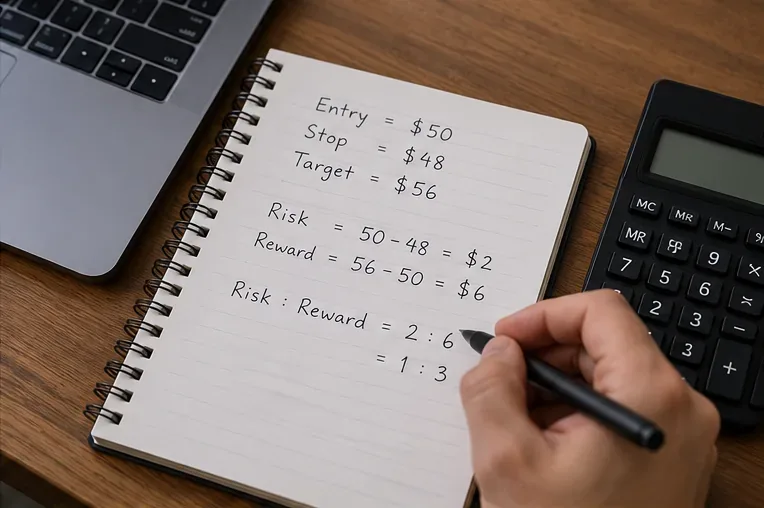
Action: Decide the maximum dollar loss you can tolerate first. Then size the trade so that even a severe adverse move does not threaten money needed for bills, emergencies, taxes, or long-term savings.
Do not average down simply because the price is lower
After a dump begins, some traders assume the lower price is automatically a bargain. But if the original rise was based on manipulation rather than fundamentals, the asset may have no clear “fair value” near the pumped price.
Action: Reassess the thesis from zero. Ask whether you would initiate the position today if you did not already own it. If the answer is no, adding more capital may compound the mistake.
What to do if you think you are already caught in a pump-and-dump
First, stop relying on the same group or promoter that encouraged the trade. Their incentives may not be aligned with yours. Second, verify whether any of the claimed news was real. Third, assess current liquidity before placing an order. In a fast decline, aggressive selling can produce worse execution than expected, while waiting can also expose you to further losses. There is no universal exit rule because the correct decision depends on your position size, liquidity, taxes, investment objective, and whether the asset still has a valid independent thesis.
If you suspect fraud, preserve evidence such as messages, usernames, transaction records, screenshots, links, and timestamps. Investor.gov directs investors to report investment scams to the SEC, and the CFTC provides a complaint process for suspected fraud in markets within its authority. SEC Tips, Complaints, and Referrals portal and CFTC complaint information.
Action: Do not pay a supposed “recovery service” merely because it claims it can get your money back. Investor.gov warns that fraud victims can be targeted again by people demanding fees to recover losses.
A current regulatory reminder
Pump-and-dump manipulation is not merely an old penny-stock problem. In July 2026, the SEC announced a Retail Fraud Working Group whose stated focus includes pump-and-dump schemes and market manipulation targeting retail investors. In August 2026, the SEC also published a proposed settlement related to allegations that Gotbit Consulting engaged in fraud and market manipulation involving a crypto asset, including alleged artificial trading volume. These actions do not mean every sharp price move is fraudulent, but they show that manipulation remains an active enforcement concern. SEC announcement of the 2026 Retail Fraud Working Group and SEC litigation release concerning Gotbit Consulting.
Self-check: can your trade survive without the hype?
Before you commit capital to a fast-moving stock or crypto asset, run this short test:
Can I explain why I am buying without mentioning social-media excitement or recent price gains?
Can I verify the main catalyst from an original, authoritative source?
Do I understand the asset’s normal liquidity and trading volume?
Do I know who is promoting it and whether they may benefit if I buy?
Have I defined the maximum amount I am willing to lose?
Would the position still make sense if the price dropped sharply tomorrow?
Am I prepared to walk away if the information remains unverified?
If several answers are no, the safest conclusion may be that you do not yet have enough verified information to risk capital. The strongest defense against a pump-and-dump scheme is not predicting the exact top. It is refusing to become the forced buyer whose urgency provides someone else with an exit.