Toncoin (TON) Ecosystem in 2026: How Telegram Is Driving Web3 Adoption
Explore the TON ecosystem, Telegram Mini Apps, wallets, payments, DeFi, and risks—plus the 2026 Toncoin-to-Gram rename and what it means.
A practical problem with researching TON in 2026 is that the terminology changed while the ecosystem kept moving. People still search for “Toncoin” and “TON token,” but the TON community voted to rename the native currency. Since June 1, 2026, the official name is Gram and the ticker is GRAM; TON remains the name of The Open Network blockchain. That distinction matters when comparing wallets, exchange listings, old tutorials, and current developer documentation.
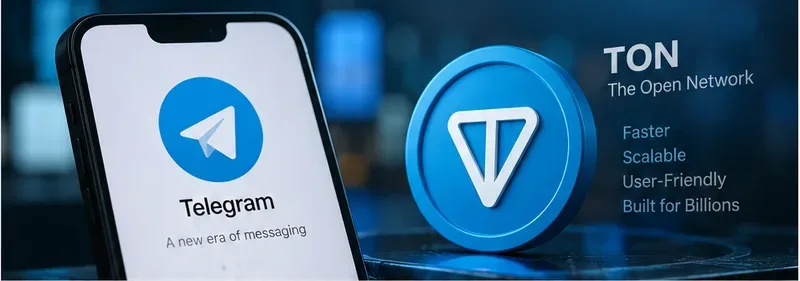
The bigger question is not the label on the coin. It is whether TON has built a credible path from familiar messaging behavior to everyday Web3 use. TON’s strongest advantage is distribution through Telegram: Mini Apps run inside the messenger, TON Connect links apps to compatible wallets, and Telegram’s current rules require Mini Apps with cryptocurrency functionality to use TON for blockchain assets and TON Connect for wallet interactions. That creates an unusually tight relationship between a major consumer app and a public blockchain, even though TON itself is not controlled by Telegram.
Most public blockchains ask users to assemble the experience themselves: install a wallet, learn addresses, find a dApp, connect the wallet, approve transactions, and then return to a social network to talk about what they did. TON tries to compress those steps into the environment where the user already spends time.
Telegram Mini Apps are ordinary web applications built with technologies such as HTML, CSS, and JavaScript, but they launch inside Telegram without a separate app installation. Developers can add blockchain interactions through TON-specific tooling. The official Telegram Mini Apps documentation describes the in-app platform, while the TON developer documentation covers wallets, SDKs, smart contracts, APIs, and application tooling.
That architecture does not eliminate Web3 complexity. Keys still need protection, transactions are still irreversible in many cases, smart-contract risk still exists, and token prices can be volatile. What changes is the surface area that a mainstream user sees. A Mini App can look and behave much more like a familiar consumer service than a conventional crypto website.
The phrase needs historical context. Telegram originally developed the TON technology, but after regulatory action in the United States it discontinued its involvement in the original launch effort in 2020. Open-source developers and the community continued the project, which evolved into today’s TON blockchain. Current TON materials describe the network as decentralized and maintained by validators and independent ecosystem participants.
Telegram’s relationship with TON later became commercially and technically important again. The most concrete evidence is not branding language; it is platform policy. Telegram’s Bot Platform Developer Terms state that Mini Apps implementing cryptocurrency functionality must use TON for blockchain assets, and wallet connections must use TON Connect except for limited bridging scenarios. Telegram’s companion blockchain guidelines give specific permitted and prohibited examples.
So TON benefits from privileged integration with Telegram’s Mini App economy, but “Telegram-backed” should not be interpreted to mean Telegram operates the blockchain or guarantees its assets, applications, uptime, or investment performance.
TON is a proof-of-stake Layer 1 designed around asynchronous message passing and sharding. Smart contracts execute on the TON Virtual Machine, and the architecture is intended to let work happen across shardchains while the masterchain coordinates the network’s overall state. TON’s current documentation reports sub-second finality as a design and operating target, which is important for consumer interactions where long confirmation waits would feel out of place.
For developers, the practical stack has become more unified. TON Connect provides the standard interface between applications and wallets. AppKit provides React and JavaScript/TypeScript components for connecting wallets, reading balances, sending GRAM and jettons, working with NFTs, and integrating DeFi operations. WalletKit targets wallet providers. The network also maintains SDKs, APIs, smart-contract tooling, and the Tolk language. These tools are documented in the official TON toolset.
The point is less about theoretical transactions per second than about product composition: a developer can place a consumer interface in Telegram, connect a wallet through a common protocol, and access TON assets and contracts without forcing the user into a separate browser-first journey.
Payments are an obvious fit for a messaging platform. TON supports its native GRAM asset as well as jettons, TON’s fungible-token standard. USDT on TON is especially relevant because stable-value transfers can make more sense for remittances, merchant payments, and peer-to-peer settlement than a volatile native asset. The current TON site highlights GRAM and USDT as part of its wallet-and-payments stack.
Wallet in Telegram provides both custodial and self-custodial experiences. Its current self-custodial product is called DeFi Account, formerly TON Wallet. According to the product’s official page, DeFi Account lives on TON and lets users manage their own keys, interact with assets, stake, swap, and access third-party services from inside Telegram. This convenience also raises the security stakes: a lost seed phrase or a successful phishing attack can still lead to permanent loss.
Telegram Mini Apps provide a distribution channel for games, loyalty systems, social products, marketplaces, trading interfaces, and other interactive services. TON’s opportunity is not that every Mini App needs a token. In fact, forcing a token into a product can make onboarding worse. The stronger model is to use blockchain only where ownership, settlement, portability, or verifiable scarcity improves the experience.
TON is also used for Telegram-adjacent digital assets such as collectible gifts, usernames, and numbers. This is one of the ecosystem’s most distinctive areas because the asset can have an obvious social context inside Telegram rather than existing only in a standalone NFT marketplace.
The DeFi layer now includes swaps, staking, lending-style strategies, and cross-chain access. As these products become easier to reach from Telegram, they also bring familiar DeFi risks: smart-contract exploits, oracle failures, liquidity shocks, bridge or wrapper risk, and the possibility that advertised yields change quickly. Ease of access should not be confused with reduced financial risk.
The same close relationship that gives TON distribution power also creates concentration risk. If Telegram changes Mini App policy, regional availability, monetization rules, or wallet integration requirements, TON applications that depend heavily on Telegram could be affected. Developers should therefore separate the health of the blockchain from the health of any single distribution channel.
Security is another constraint. A smooth interface can make complex financial actions feel deceptively simple. Self-custody users still need to protect recovery phrases, verify transaction details, and avoid impersonation links. Developers need contract audits, careful permissions, monitoring, and incident plans. Consumer-scale adoption magnifies the cost of a weak security model.
Regulation can also vary by country. Wallet access, token trading, stablecoins, staking, derivatives, and identity checks may be treated differently across jurisdictions. Availability inside Telegram does not mean a feature is legal or supported everywhere.
Finally, ecosystem activity should be evaluated by retention and useful transactions, not only by wallet counts, token launches, or short-lived game campaigns. Crypto distribution can produce rapid spikes in users, but durable adoption requires products people keep using after incentives disappear.
Start with the simplest layer: use official sources to confirm what the network and Telegram actually support today. The official TON site is the best starting point for current network positioning and ecosystem tooling, while Telegram’s own developer pages define the Mini App rules.
Next, separate three questions that are often mixed together: Is TON technically capable of supporting the application? Does Telegram give the application useful distribution? And does the specific product have sustainable demand? A “yes” to one does not guarantee a “yes” to the others.
Then inspect the application itself. Identify who controls the wallet keys, what permissions a transaction requests, whether smart contracts are open for review, how funds enter and leave the system, what happens if a third-party service fails, and whether the product depends on incentives that may end.
For investors, the renamed native asset adds one more check: current official sources use Gram (GRAM), while older content and some third-party interfaces may still say Toncoin or TON. Do not assume two labels refer to different native assets without verifying the contract, network, and exchange support.
A useful self-check is to ignore token price for a moment and look for product evidence. Are Mini Apps retaining users after reward campaigns? Are people transferring stable-value assets for real payments? Are developers shipping services that work without requiring users to understand blockchain mechanics? Are wallets making self-custody safer without hiding the responsibility that comes with it? Are transaction costs and confirmation times stable under real load?
TON’s strongest thesis is straightforward: Web3 adoption may accelerate when blockchain functionality is embedded inside software people already use. Telegram gives TON a rare opportunity to test that idea at consumer scale. The outcome will depend less on slogans about a “revolution” and more on whether the ecosystem can convert distribution into secure, repeatable, useful behavior.
As of September 16, 2026, the most important terminology update is also a good reminder to verify current documentation: the blockchain is TON, while the native currency formerly called Toncoin is officially Gram (GRAM). Anyone researching the ecosystem should treat older “Toncoin/TON token” references as legacy naming and check current official sources before acting.
Explore the TON ecosystem, Telegram Mini Apps, wallets, payments, DeFi, and risks—plus the 2026 Toncoin-to-Gram rename and what it means.
Explore Berachain’s Proof of Liquidity model, BERA, BGT, HONEY, Reward Vaults, and notable DApps including BEX, Bend, Infrared, Kodiak, Dolomite, and BeraBorrow.
Understand Mantle’s MNT-powered ecosystem, treasury structure, yield layers, L2 architecture, growth signals, and the risks investors should track in 2026.
A practical 2026 evaluation of Monad’s parallel EVM, ecosystem traction, developer tradeoffs, and how it compares with Ethereum, Sei, and MegaETH.
A practical Celestia deep dive explaining modular blockchains, data availability sampling, namespaces, Blobstream, TIA utility, and the trade-offs rollups inherit.
Explore the Base ecosystem in 2026, from Aerodrome and Morpho to Aave, Uniswap, Virtuals, Zora, Moonwell, and x402 agent payments.
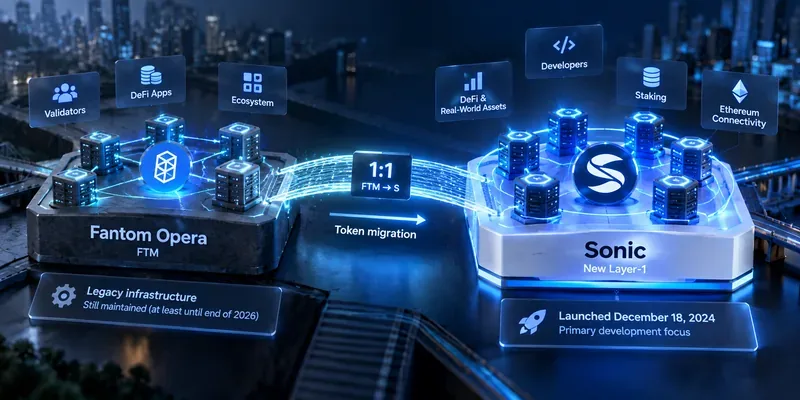
Analyze Fantom’s Sonic transition, the FTM-to-S migration, Sonic’s architecture, tokenomics, developer incentives, ecosystem impact, and the risks that still matter in 2026.
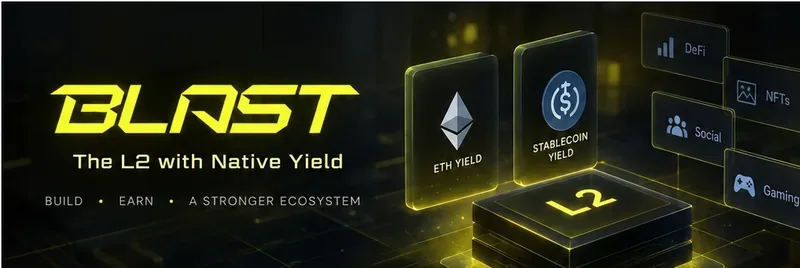
A practical 2026 analysis of Blast L2 native yield, ETH and USDB mechanics, ecosystem protocol changes, current risks, and how to verify opportunities before committing capital.
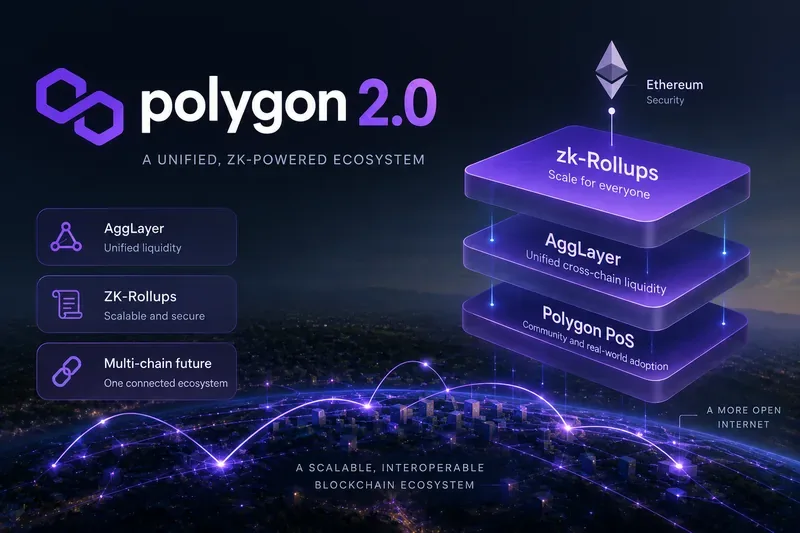
A current analysis of Polygon 2.0, the POL upgrade, Polygon PoS, AggLayer, zkEVM’s 2026 shutdown, and why the original ZK-rollup migration story has changed.
A current Arbitrum (ARB) analysis covering token supply, vesting, governance utility, Stylus, Arbitrum chains, ArbOS upgrades, risks, and the 2026 roadmap.