Home
» Ecosystem
»
Evaluating the Monad Ecosystem in 2026: The Case for—and Tradeoffs of—a Parallel EVM
Evaluating the Monad Ecosystem in 2026: The Case for—and Tradeoffs of—a Parallel EVM
Monad is no longer just a high-throughput EVM thesis. Its public mainnet launched on November 24, 2025, and by September 16, 2026 the network’s own website was displaying roughly 786 million transactions, more than 8.9 million active wallets, over 140 live apps, and about $1 billion in DeFi TVL. Those are network-published counters rather than independently audited figures for this article, but they make one point clear: evaluating Monad in 2026 is now about production tradeoffs, not testnet promises. See the current counters on the official Monad website.
The central question is not whether Monad is “fast.” It is whether its combination of optimistic parallel execution, asynchronous execution, EVM compatibility, low-latency finality, and an increasingly credible application stack creates enough practical advantage to justify choosing a newer Layer 1 over Ethereum, established L2s, or rival high-performance EVMs.
A developer workspace visualizing parallel transaction processing and an EVM-compatible blockchain pipeline—the architectural idea at the center of Monad’s performance strategy.
Where Monad stands in 2026
Monad describes itself as an Ethereum-compatible Layer 1 with full EVM bytecode compatibility and Ethereum JSON-RPC compatibility. Its current documentation lists a target of 10,000 transactions per second, 300 ms block frequency, and 600 ms finality. The same documentation says the execution and consensus clients are open source and written in C++ and Rust. The most important source for these claims is Monad’s own developer documentation.
Those headline numbers matter, but they should not be the sole basis for a chain decision. For most teams, four other questions are more useful: Can existing Solidity contracts move over without major rewrites? Does the chain remain performant when many transactions touch the same hot state? Is the surrounding liquidity and infrastructure deep enough for the application? And what chain-specific behavior breaks assumptions inherited from Ethereum?
What “parallel EVM” actually means on Monad
Monad keeps the familiar EVM transaction model: transactions inside a block remain linearly ordered, and the final result is intended to match sequential EVM semantics. The performance change happens in how execution work is scheduled.
Optimistic parallel execution
Monad begins executing transactions before all earlier transactions in the block have finished. If two transactions are independent, they can make progress at the same time. If a later transaction read state that an earlier transaction subsequently changed, Monad detects the conflict and re-executes the affected transaction with the correct state. Updated state is still merged in transaction order. Monad documents this design in its parallel execution architecture.
The benefit is straightforward: multi-core CPUs can process more independent work than a purely sequential executor. The tradeoff is equally important. Parallelism is workload-dependent. A decentralized exchange, game, or social app whose transactions repeatedly update the same global storage key can create contention and force more re-execution. “Parallel EVM” does not mean every transaction runs independently at full speed.
Asynchronous execution changes the timing budget
Monad also separates consensus on transaction ordering from execution. Rather than requiring every transaction in a proposed block to be fully executed before validators agree on the block, consensus can progress while execution runs in a slightly lagged pipeline. Monad says this gives execution essentially the full block interval instead of squeezing execution into the consensus critical path. The design and its delayed state-root mechanics are explained in the asynchronous execution documentation.
This architecture produces an unusual tradeoff for EVM developers: very fast ordering and finality, but some state semantics differ from Ethereum. For example, Monad documents that a newly funded account that previously had zero balance may need to wait for the funding transaction to age by the protocol’s delay window before it can immediately spend those funds. That is not a typical Ethereum application assumption.
MonadDb is part of the performance story
Execution speed is not only a CPU problem. State reads and writes are a major bottleneck on EVM chains. Monad therefore built MonadDb, a custom database optimized around Ethereum’s authenticated state structure. Its design includes asynchronous I/O, a Patricia-trie-oriented layout, versioned state, and an option to bypass the filesystem and access block devices directly. The technical rationale is documented in the MonadDb architecture.
For application teams, the implication is that Monad’s performance advantage is a system-level design rather than a single “parallel execution” feature. That is encouraging for sustained throughput, but it also means performance depends on the health of several new components rather than a drop-in modification to an otherwise unchanged Ethereum client.
The EVM compatibility tradeoff: familiar, but not identical
Monad is highly compatible with Ethereum tooling, but “EVM-compatible” should not be read as “behaviorally identical to Ethereum in every edge case.” Monad maintains an explicit list of differences in its Ethereum compatibility notes.
Gas accounting differs: Monad documents charging transactions based on the gas limit rather than actual gas usage in the same way Ethereum developers may expect. Frontends and transaction builders should test fee estimation carefully.
There is no global mempool: transactions are forwarded toward upcoming leaders instead. Systems that rely on observing a public global mempool need a different design.
EIP-4844 blob transactions are not supported: this matters for applications or infrastructure that assume Ethereum’s blob transaction type.
Historical state access is constrained: because of throughput and storage requirements, ordinary full nodes do not expose arbitrary historical state indefinitely.
Contract and memory limits differ: Monad supports larger contract code sizes and uses different memory-expansion rules, so local testing should use Monad-aware tooling.
For a standard Solidity dapp, those differences may be manageable. For wallets, MEV systems, indexers, account-abstraction infrastructure, archive analytics, or protocols with unusual gas and state assumptions, they are significant enough to justify dedicated integration tests.
Is the ecosystem substantial enough?
A fast chain without stablecoins, lending, DEX liquidity, bridges, wallets, or indexers is difficult to use in production. Monad’s strongest 2026 improvement is that its ecosystem is no longer limited to chain-native experiments.
Circle launched native USDC and CCTP on Monad with mainnet on November 24, 2025. Circle’s official launch notice confirms native USDC, CCTP, Wallets, and Contracts support on Monad; see Circle’s Monad announcement. Native USDC reduces dependence on wrapped stablecoin liquidity and gives payments and DeFi teams a more standard settlement asset.
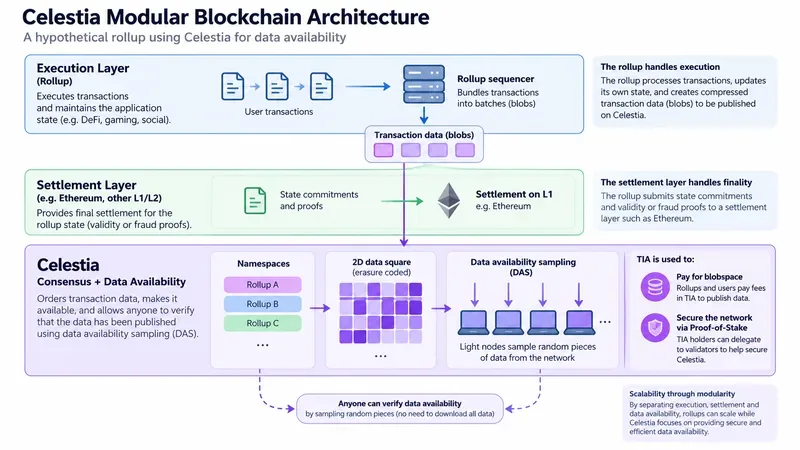
Aave Labs reported in its July 2026 development update that Aave V3 launched on Monad and that GHO was launched on Monad. That update is available from the Aave governance forum. Uniswap v3 also has a recognized Monad deployment, while the official Monad application directory lists a growing mix of trading, lending, payments, bridges, wallets, and infrastructure. See the Monad ecosystem directory.
This breadth lowers integration risk compared with an early-stage chain, but app count alone can be misleading. A useful ecosystem evaluation should still examine real liquidity depth, stablecoin concentration, bridge dependence, oracle coverage, RPC reliability, indexer latency, contract audits, and whether activity is sustained without incentives.
Monad versus other EVM paths
Option
Execution and latency profile
Main advantage
Main tradeoff
Monad
Layer 1; optimistic parallel execution; 300 ms block frequency and 600 ms finality in current Monad docs
High performance while preserving familiar EVM bytecode and RPC interfaces
Newer network with chain-specific gas, state, mempool, and archival behavior
Ethereum mainnet
Layer 1; 12-second slots; finality is much slower than block inclusion
Deepest native settlement layer, mature tooling, and the broadest EVM security history
Not designed for sub-second application feedback at Layer 1
Sei EVM
Layer 1; optimistic parallel execution; Sei documents roughly 400 ms block times/finality
A direct parallel-EVM alternative with its own production ecosystem
Different architecture, token economy, infrastructure, and application liquidity from Ethereum or Monad
MegaETH
Ethereum Layer 2; specialized sequencer; roughly 10 ms mini-blocks and 1-second EVM blocks in current docs
Extremely low application-visible latency and real-time API design
Different trust and decentralization model from a Layer 1; depends on a specialized high-performance sequencer architecture
For the Ethereum baseline, see Ethereum.org’s block documentation. For the closest direct parallel-EVM comparison, Sei’s official docs describe its current EVM and optimistic parallel execution at docs.sei.io. MegaETH’s current mainnet parameters and its real-time mini-block model are documented at docs.megaeth.com.
Which type of team should consider Monad?
For an existing Solidity team that wants a fast Layer 1
Monad is particularly attractive when the team wants to keep Solidity, EVM tooling, existing audits, and familiar wallet patterns while reducing block and finality latency. Foundry, Hardhat, Remix, Ethereum-style JSON-RPC, and standard contract bytecode all reduce migration work. The right test is not “does it compile?” but “does the application behave correctly under Monad’s fee, state, and transaction-lifecycle rules?”
For trading, games, social, or high-interaction apps
Monad’s sub-second block and finality targets create a more responsive feedback loop than Ethereum mainnet. These apps can benefit most when state writes are naturally partitioned across users, markets, or game objects. If every action touches one shared counter, pool, queue, or registry, parallel execution may deliver less benefit than headline throughput suggests.
For teams that need the strongest Ethereum-native settlement assumptions
Ethereum mainnet or an Ethereum L2 may still be the more natural choice when the primary requirement is inheriting Ethereum settlement, using Ethereum-native data availability, or integrating tightly with existing L1 liquidity and infrastructure. Monad is an independent Layer 1, so its validator set, staking economics, governance, and failure modes are its own.
For teams optimizing for the lowest possible end-to-end latency
Monad should be compared directly with architectures such as MegaETH rather than only with Ethereum mainnet. MegaETH’s design pursues millisecond-scale application visibility through a specialized sequencer and mini-blocks, whereas Monad pursues sub-second performance on a standalone Layer 1 with validators executing and maintaining the chain. These are different engineering choices, not merely different speed settings.
What should you test before committing?
Measure your own workload. Benchmark contracts with realistic contention, not only independent token transfers.
Audit Ethereum assumptions. Test gas-limit charging, balance timing, mempool assumptions, EIP-7702 behavior, transaction simulation, and unsupported transaction types.
Stress the full stack. RPC, indexers, oracles, bridges, wallet infrastructure, and data pipelines can become bottlenecks even when block production is fast.
Check node requirements. Monad currently documents a 16-core CPU at 4.5 GHz or higher, at least 32 GB RAM, fast NVMe storage, and substantial bandwidth. See the official hardware requirements.
Evaluate liquidity quality, not only TVL. Examine slippage, stablecoin depth, borrow utilization, bridge concentration, and whether liquidity remains available during volatile periods.
Plan for protocol evolution. Monad’s changelog shows active protocol revisions. Production teams should monitor client releases and behavioral changes through the official changelog.
Bottom line
Monad has a credible claim to being one of the most important parallel-EVM networks to evaluate in 2026 because it combines a live mainnet, a system-level performance architecture, strong EVM compatibility, native USDC, recognizable DeFi protocols, and a broadening developer stack. That does not make it automatically superior to Ethereum, Sei, MegaETH, or established L2s.
The tradeoff is clearer than the marketing slogan: Monad offers a fast standalone EVM Layer 1 by changing execution scheduling, consensus-execution timing, storage, and several Ethereum behaviors. Teams that value familiar Solidity development plus sub-second L1 responsiveness have a strong reason to test it. Teams that prioritize Ethereum settlement, globally observable mempools, mature archival infrastructure, or a specific L2 security model may prefer a different path.
The practical decision should come from workload benchmarks, infrastructure tests, liquidity analysis, and protocol-specific risk review—not from TPS alone. As of September 16, 2026, Monad has moved far enough beyond the testnet stage that those tests can be run against a real ecosystem rather than a roadmap.