Solana Ecosystem Analysis: Can It Sustain Its Q4 2026 Momentum?

Solana’s 2026 ecosystem is expanding across DeFi, stablecoins, RWAs, and payments. Here’s what could sustain—or weaken—its Q4 momentum.
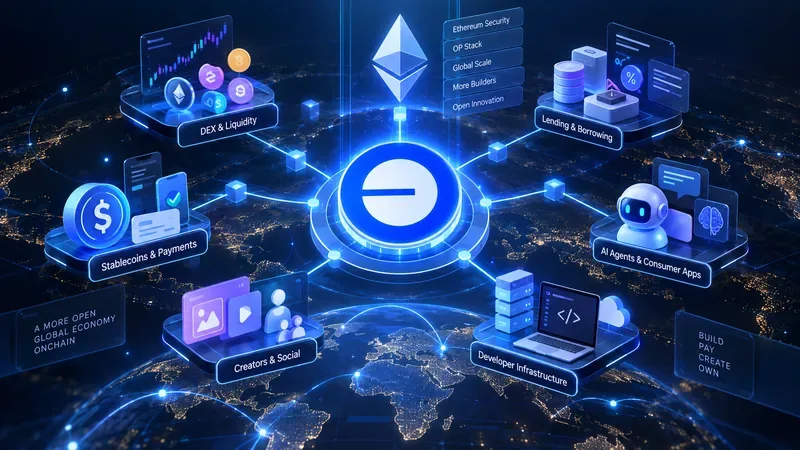
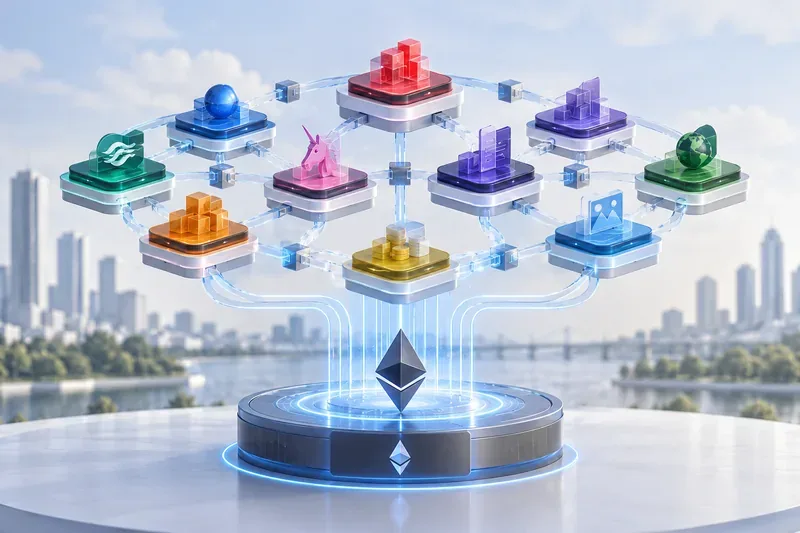
The Optimism ecosystem is easier to understand once you stop treating “Optimism” as a single Layer 2. OP Mainnet is one chain; the Superchain is the broader network of OP Stack chains that share standards, upgrades, governance relationships, and an increasingly common interoperability roadmap. That distinction matters because adoption can look modest if you measure only OP Mainnet, and much larger if you aggregate Base, Unichain, Ink, Soneium, World Chain, Celo, OP Mainnet, and other participating OP Chains.
It also changes how protocols should be compared. A trader may care most about where liquidity is deepest. A lender may prioritize risk controls and market design. An application developer may value distribution, common tooling, or cross-chain reach. The right question is therefore not “Which Superchain protocol is best?” but “Which combination of chain, protocol, and interoperability assumptions matches the job?”
Metrics need dates and definitions. The Superchain Ecosystem Index was last updated on June 29, 2026 and reported 14.1 million daily L2 transactions and a 31.1% L2 market share. Earlier monthly snapshots show why a single-day or single-month number should not be treated as a permanent run rate: the ecosystem reported an average 20.4 million transactions per day in February 2026 and 16.6 million in March 2026.
| Metric | Verified snapshot | What it is useful for | Important limitation |
|---|---|---|---|
| Daily L2 transactions | 14.1M on June 29, 2026 | Shows aggregate network usage | Transaction counts can be affected by chain mix and application behavior |
| L2 market share | 31.1% on June 29, 2026 | Places Superchain activity in the broader L2 market | Do not compare it directly with “fee market share” or TVL share |
| Average daily transactions | 16.6M in March 2026 | Useful as a monthly activity baseline | Different from a point-in-time daily figure |
| TVL | $4.8B in March 2026 | Indicates capital committed to applications | TVL is not the same as trading volume, users, or economic security |
| Total value secured | $13.9B in March 2026 | Broadens the view beyond app TVL | Methodology differs from DeFi TVL |
| Stablecoin balances | $6.1B in March 2026 | Useful proxy for payments and DeFi settlement capacity | Balances do not prove that capital is actively circulating |
There is another metric trap. In January 2026, the Optimism Foundation said the Superchain had captured 61.4% of L2 fee market share and was processing 13% of all crypto transactions. The same announcement said Optimism had collected 5,868 ETH in Superchain revenue over the preceding 12 months. Those figures describe different dimensions from the June Index’s 31.1% L2 market-share figure, so putting them in one chart as if they were the same series would be misleading. The Foundation’s OP token buyback announcement is useful for understanding the economic relationship between network usage and the Collective.
The OP Stack gives participating chains a common technical foundation, and Optimism’s developer tooling is explicitly designed around Superchain applications. That creates real advantages: similar execution environments, shared upgrade work, reusable infrastructure, and a path toward native cross-chain messaging. But users should not assume that assets and state already behave as if every OP Chain were one synchronous blockchain.
Optimism’s own Superchain Dev Console currently describes Superchain interoperability as being in active development. The official interoperability tutorial also focuses on development environments and test networks. The practical takeaway is simple: common standards reduce integration cost, but production applications still need to model bridging, messaging, liquidity placement, failure modes, and chain-specific execution.
Uniswap is relevant to the Superchain in two ways. First, its protocol and API provide swap liquidity across multiple networks, including Base, Optimism, and Unichain. Second, Unichain itself is an OP Stack L2 designed around DeFi. At mainnet launch in February 2025, Uniswap Labs said nearly 100 crypto products and protocols were already building on Unichain. The official Unichain mainnet announcement is the appropriate source for that launch context.
Choose it when: you want a widely integrated AMM stack, need access through established wallet/API integrations, or are building specifically around Uniswap v4 and Unichain. Tradeoff: “Uniswap liquidity” is not a single global pool. Execution quality still depends on the chain, pair, pool design, routing, fees, and current liquidity.
Aerodrome describes itself as the trading and liquidity hub of Base, while Velodrome positions itself as a liquidity marketplace for the Superchain. Their models use emissions, voting, fees, and incentives to coordinate liquidity rather than relying only on passive pool creation. This can be attractive for projects that need active liquidity bootstrapping, but it also means participants must understand incentive mechanics rather than looking only at headline TVL.
The most important 2026 update is structural: Aerodrome’s official documentation says Aerodrome and Velodrome are set to merge into “Aero,” a unified liquidity layer. Meanwhile, Velodrome’s Superswaps documentation explains its cross-chain routing approach and states that its Superchain module is designed to support native interoperability as that capability comes online.
Choose Aerodrome today when: Base-native liquidity and its incentive ecosystem are central to your use case. Choose Velodrome/Superswaps when: reaching liquidity across several supported Superchain networks matters more than staying on one chain. Tradeoff: the product surface is evolving, so integrations should be checked against current contracts and documentation instead of assuming the 2024–2025 architecture remains unchanged.
Aave V3 is useful when you want pooled, overcollateralized lending with governance-managed parameters such as loan-to-value ratios, liquidation thresholds, supply caps, and borrowing controls. The current Aave deployment documentation lists official V3 deployments on Optimism, Base, Celo, and Soneium among its supported networks.
Choose it when: you prefer a mature pooled-liquidity model with explicit protocol risk parameters and an established governance process. Tradeoff: the same asset can have different liquidity, caps, rates, and collateral treatment on different deployments. “Aave on the Superchain” is therefore not one interchangeable lending market.
Morpho takes a more modular approach. Its documentation describes immutable lending markets and vault infrastructure, while its API exposes market, vault, utilization, fee, reward, and historical data. As of September 2026, the Morpho API documentation lists Base, OP Mainnet, Unichain, and World Chain among supported networks.
Choose it when: market customization, curated vault strategies, or programmable lending infrastructure matters. Tradeoff: modularity shifts more attention onto market configuration, oracle design, collateral selection, and curator choices. Users should evaluate the specific market or vault rather than treating the Morpho brand as a uniform risk profile.
Transaction count is useful, but it should be paired with economic and behavioral indicators. A healthier dashboard would track at least five dimensions: recurring active addresses, stablecoin balances and transfer volume, application fees, DEX volume relative to liquidity, and cross-chain transfer activity. For builders, retention and cost per active user can matter more than raw chain transactions. For liquidity providers, fee generation relative to incentives is more informative than TVL alone.
Interoperability deserves its own line item. Optimism governance has made cross-chain interoperability a strategic objective, but the production experience should be judged by observable outcomes: supported chains, message latency, failure handling, asset portability, and how much liquidity can move without forcing users through manual bridge workflows. Until native interoperability is broadly production-ready, application teams should treat cross-chain UX as an integration problem they still own.
The strongest case for the Optimism Superchain is not that every OP Chain is identical. It is that a shared stack can let specialized chains and applications benefit from common engineering while preserving room for different markets and product strategies. The cost of that flexibility is fragmentation: liquidity, users, protocol parameters, and execution conditions still vary by chain.
For practical decisions, use Superchain-wide adoption metrics to judge the health of the broader platform, then drop down to the chain and protocol level before committing capital or engineering resources. Check the exact deployment, contract set, liquidity, risk parameters, and interoperability status you will actually use. That approach captures the upside of a growing multi-chain ecosystem without pretending that aggregate adoption automatically translates into equal opportunity—or equal risk—everywhere inside it.
Solana’s 2026 ecosystem is expanding across DeFi, stablecoins, RWAs, and payments. Here’s what could sustain—or weaken—its Q4 momentum.
A 2026 guide to the Optimism Superchain: verified adoption metrics, OP Stack tradeoffs, and how Uniswap, Aerodrome, Velodrome, Aave, and Morpho fit different needs.
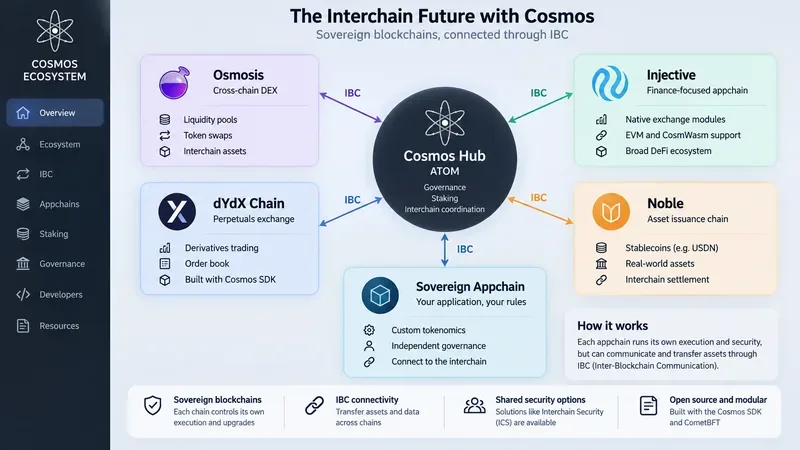
Understand how Cosmos, ATOM, IBC, and appchains fit together, plus how to judge Osmosis, dYdX Chain, Injective, Noble, and the interchain model.
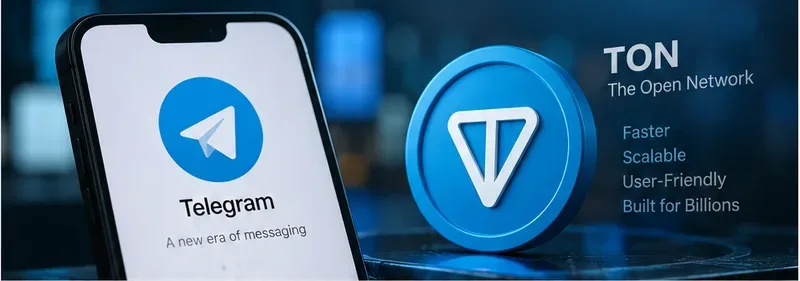
Explore the TON ecosystem, Telegram Mini Apps, wallets, payments, DeFi, and risks—plus the 2026 Toncoin-to-Gram rename and what it means.
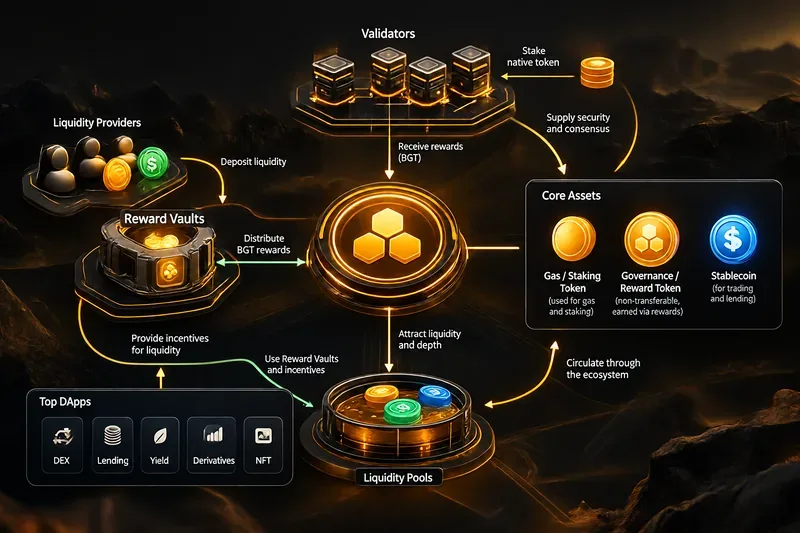
Explore Berachain’s Proof of Liquidity model, BERA, BGT, HONEY, Reward Vaults, and notable DApps including BEX, Bend, Infrared, Kodiak, Dolomite, and BeraBorrow.
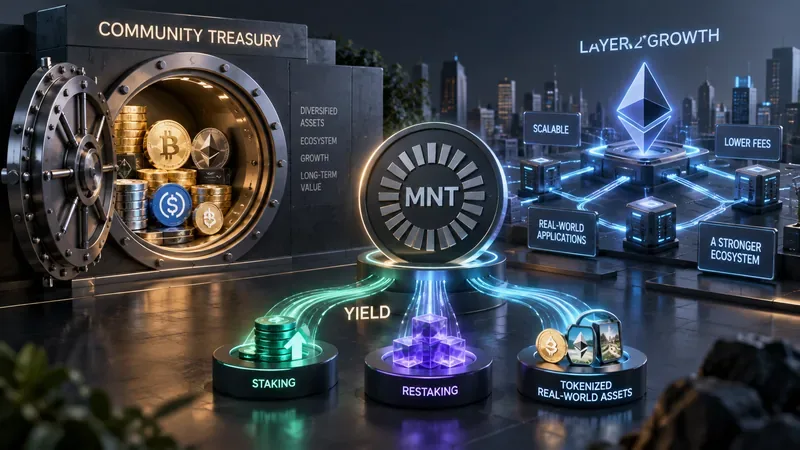
Understand Mantle’s MNT-powered ecosystem, treasury structure, yield layers, L2 architecture, growth signals, and the risks investors should track in 2026.
A practical 2026 evaluation of Monad’s parallel EVM, ecosystem traction, developer tradeoffs, and how it compares with Ethereum, Sei, and MegaETH.
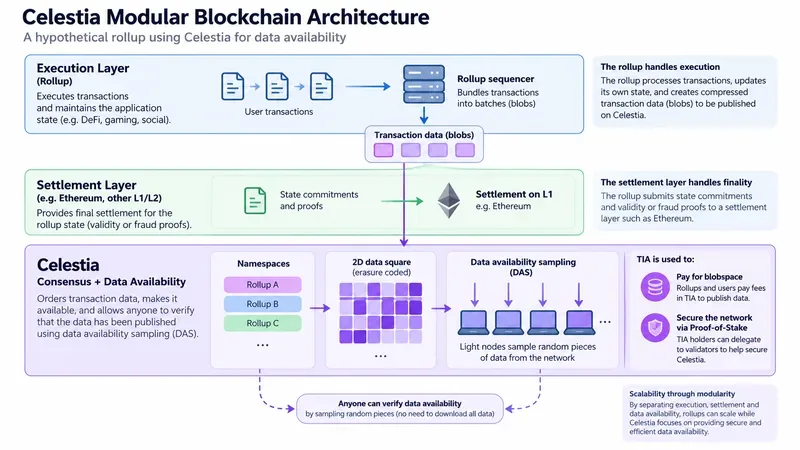
A practical Celestia deep dive explaining modular blockchains, data availability sampling, namespaces, Blobstream, TIA utility, and the trade-offs rollups inherit.
Explore the Base ecosystem in 2026, from Aerodrome and Morpho to Aave, Uniswap, Virtuals, Zora, Moonwell, and x402 agent payments.
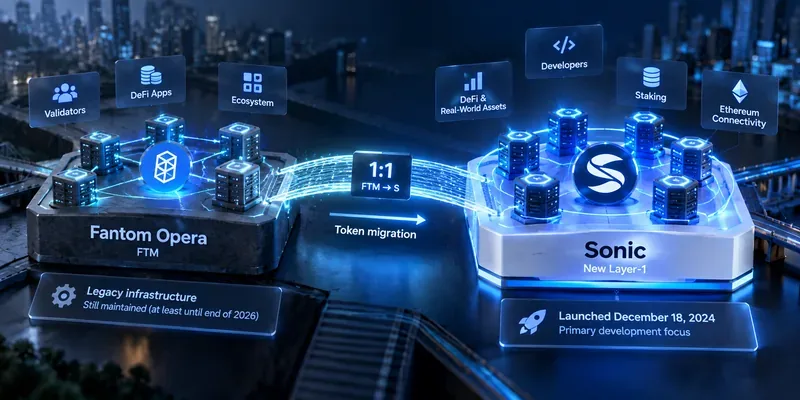
Analyze Fantom’s Sonic transition, the FTM-to-S migration, Sonic’s architecture, tokenomics, developer incentives, ecosystem impact, and the risks that still matter in 2026.