Home
» News
»
How Federal Reserve Rate Decisions Shift Crypto Liquidity—and When the Signal Breaks
How Federal Reserve Rate Decisions Shift Crypto Liquidity—and When the Signal Breaks
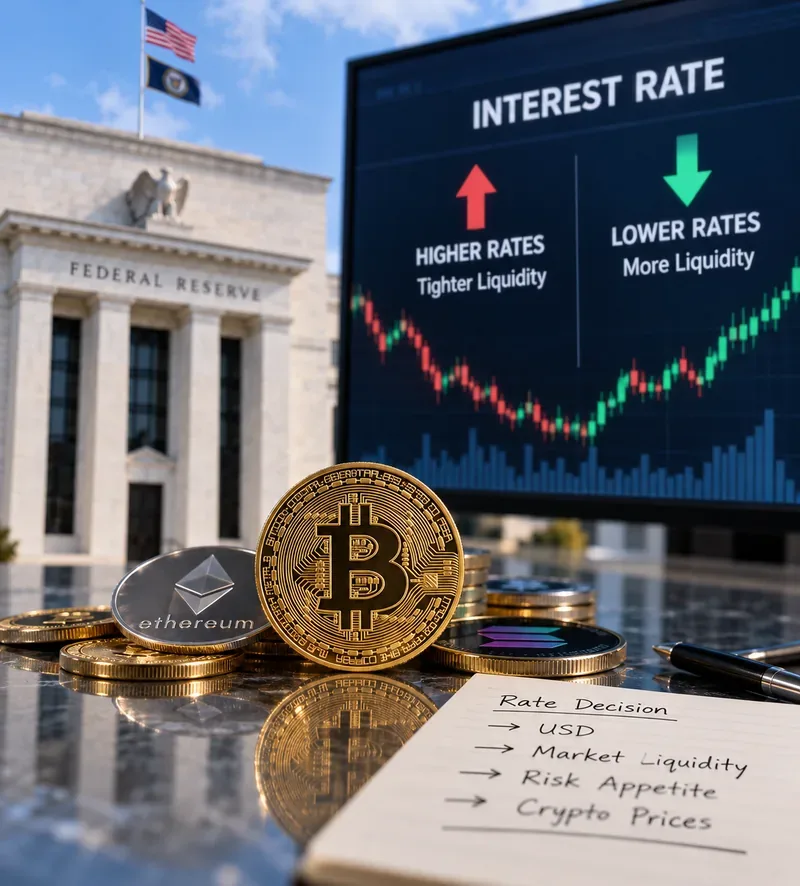
The most important answer is this: Federal Reserve rate decisions change crypto liquidity mainly by changing the price of dollars, the return available on low-risk assets, and the willingness of investors to finance risk. A surprise rate hike or a more hawkish policy path usually makes dollar funding more expensive and cash-like assets more attractive, which tends to drain risk-taking capacity from crypto. A rate cut or a more dovish expected path can do the opposite. But the relationship is not mechanical: what markets expected, why the Fed moved, the state of bank reserves, the U.S. dollar, stablecoin supply, and crypto-specific leverage can all change the result.
That distinction matters because traders often reduce the story to “cuts are bullish, hikes are bearish.” The real transmission chain is longer: Fed policy → money-market rates and financial conditions → dollar demand and funding costs → portfolio allocation and leverage → stablecoin and exchange liquidity → crypto prices and market depth. A break anywhere in that chain can weaken or even reverse the expected reaction.
Federal Reserve decisions can affect crypto through several channels at once: the return on dollars, funding costs, the dollar exchange rate, risk appetite, stablecoin demand, and leverage.
Where does the Fed stand right now?
As of September 15, 2026, the September 15–16 FOMC meeting is in progress, so the latest completed policy decision is still the July 29, 2026 meeting. At that meeting, the Federal Open Market Committee kept the federal funds target range at 3.50% to 3.75%. The Fed also said it was continuing its policy of maintaining ample reserves in the banking system. The current meeting schedule can be checked on the Federal Reserve’s official FOMC calendar, while the latest completed decision is available in the July 29, 2026 FOMC statement.
This timing is important for anyone reading crypto price action around an FOMC week. Before the statement is released, markets are trading expectations. After the statement, they are repricing the difference between what was expected and what the Fed actually delivered.
Why do higher rates usually reduce crypto liquidity?
1. Cash and Treasury bills become more competitive
Crypto has no central-bank-guaranteed yield. When short-term U.S. rates rise, Treasury bills, money-market instruments, bank deposits, and other dollar assets can offer a higher return with much lower price volatility than Bitcoin or altcoins. That raises the opportunity cost of holding speculative assets.
The Fed itself describes monetary policy transmission in terms of changes in interest rates, asset prices, credit conditions, and the foreign exchange value of the dollar. Those channels affect spending and portfolio decisions across the economy. The official explanation is available at Federal Reserve: What Are the Goals of Monetary Policy and How Does It Work?.
For crypto, the practical consequence is that a fund, family office, or individual investor does not compare Bitcoin only with equities. They also compare it with the yield on very short-duration dollar assets. If cash yields are high enough, some capital that might otherwise sit in stablecoins, spot crypto, basis trades, or leveraged strategies can stay off-chain.
2. Dollar funding and leverage become more expensive
Higher policy rates tend to lift short-term funding costs across the financial system. Crypto leverage is not funded directly at the federal funds rate, but institutional borrowing, prime-broker financing, futures basis trades, market-making inventories, and cross-asset arbitrage all exist within a broader dollar funding environment.
When financing costs rise, leveraged positions need a larger expected return to remain attractive. Market makers may reduce inventory, arbitrage spreads may need to widen, and speculative traders may use less leverage. In crypto markets, that can show up as thinner order books, smaller position sizes, lower open interest, or more sensitivity to large trades.
The reverse can happen when expected policy rates fall. Financing becomes cheaper at the margin, collateral constraints may feel less binding, and investors may be more willing to hold volatile assets. But a rate cut does not guarantee that outcome if the cut is responding to a severe recession, banking stress, or another shock that causes investors to seek safety.
3. A stronger dollar can pressure global crypto demand
U.S. rate increases can make dollar assets relatively more attractive, supporting the dollar under some conditions. A stronger dollar raises the effective cost of dollar-priced assets for investors whose income and balance sheets are denominated in other currencies. Because most major crypto markets still reference dollar prices and dollar-linked stablecoins, this channel can matter globally.
The relationship is not one-to-one. Exchange rates also respond to growth expectations, foreign central-bank policy, fiscal conditions, geopolitical risk, and capital flows. A hawkish Fed can therefore coincide with a weaker dollar if other forces dominate. What matters for crypto is the combined movement in policy expectations, real yields, the dollar, and risk appetite rather than the Fed rate alone.
How do Fed decisions affect stablecoin liquidity?
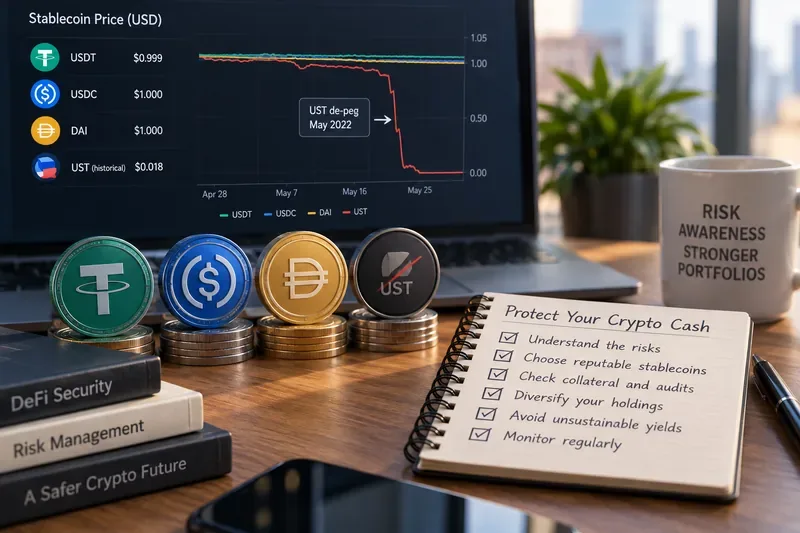
Stablecoins are one of the clearest bridges between traditional monetary policy and on-chain liquidity. Major dollar stablecoins are generally backed by cash, bank deposits, Treasury bills, repurchase agreements, or similar short-term dollar assets. That means changes in U.S. rates affect both the economics of stablecoin reserves and the attractiveness of holding stablecoins versus off-chain yield-bearing instruments.
A 2024 Bank for International Settlements working paper examined stablecoins, money-market funds, and U.S. monetary policy shocks. The authors found that monetary tightening was associated with a decline in stablecoin market capitalization, while prime money-market fund assets rose. The paper argues that the monetary-policy-driven risk environment is important for understanding stablecoin demand. See the original BIS Working Paper 1219: Stablecoins, Money Market Funds and Monetary Policy.
This does not mean every hike immediately reduces every stablecoin’s supply. Issuers may earn more on reserve assets when short-term yields rise, and crypto-native demand can surge during periods of market stress as traders sell volatile tokens into stablecoins. The useful signal is broader: persistent tightening can make off-chain cash alternatives more competitive and can reduce the incentive to keep marginal capital inside the crypto ecosystem.
Why the balance sheet matters—but not in the simplistic “money printer” sense
Fed rate policy and Fed balance-sheet operations are related, but they are not the same thing. This is especially important in 2026.
After balance-sheet runoff ended in late 2025, the Federal Reserve began reserve-management purchases of shorter-term Treasury securities to keep banking-system reserves at ample levels. New York Fed officials have repeatedly emphasized that these purchases are technical operations designed to maintain interest-rate control and should not be confused with large-scale asset purchases intended to ease financial conditions.
For crypto analysis, this means a rising Fed balance sheet does not automatically equal a fresh wave of speculative liquidity. You need to ask why the balance sheet is changing. Purchases designed simply to offset currency growth, Treasury General Account swings, or reserve demand can coexist with a policy rate that remains restrictive.
What matters more: the rate change or the surprise?
In the short run, the surprise often matters more. Markets price expected Fed decisions before the meeting through Treasury yields, futures markets, the dollar, equities, and other instruments. If traders fully expect a 25-basis-point cut and the Fed delivers exactly that, the immediate crypto move may be small—or even negative if the accompanying statement signals fewer future cuts.
Consider three simplified scenarios:
Fed outcome
Typical liquidity implication
Why crypto may react differently
Unexpected hike or hawkish guidance
Tighter financial conditions, higher cash hurdle rate, less leverage
Crypto may fall more sharply if leverage is already elevated
Expected cut with neutral guidance
Some easing may already be priced in
Little reaction if markets anticipated the move weeks earlier
Emergency cut during financial stress
Lower policy rates, but severe risk aversion may dominate initially
Crypto can still sell off as investors raise cash and reduce leverage
The same logic applies to unchanged rates. A “hold” can be dovish if the market expected a hike, or hawkish if traders expected a cut. The policy path communicated through the statement, press conference, and Summary of Economic Projections can matter more than the single meeting move.
A concrete example: the 2022 tightening cycle
The 2022 cycle illustrates why crypto liquidity can weaken when the risk-free return rises quickly. In January 2022, the Fed still held the federal funds target range at 0% to 0.25% while signaling that rate increases would soon be appropriate. By December 2022, the target range had risen to 4.25% to 4.50%.
Crypto’s 2022 drawdown cannot be attributed to the Fed alone. The market also experienced major crypto-specific failures, deleveraging, bankruptcies, and confidence shocks. That is exactly the point: monetary tightening can reduce the system’s tolerance for leverage, but the size of the crypto reaction depends on vulnerabilities already inside the market.
When does the Fed-to-crypto liquidity signal work best?
The signal is most useful when several indicators point in the same direction. A hawkish Fed is more likely to produce visibly tighter crypto liquidity when short-term Treasury yields rise, the dollar strengthens, stablecoin growth slows, leverage is being reduced, and risky assets broadly reprice lower.
A dovish shift is more likely to support crypto when short-term yields fall, credit markets remain orderly, the dollar softens, stablecoin supply expands, and crypto leverage is not already dangerously stretched. In that environment, lower funding costs and a lower cash hurdle rate can translate more cleanly into renewed risk-taking.
The relationship is less reliable when a major crypto-specific catalyst dominates. Examples include exchange failures, regulatory shocks, protocol exploits, large token unlocks, ETF-related flows, forced liquidations, or sudden changes in stablecoin confidence. In those situations, crypto can decouple from the macro signal for days or weeks.
What should traders watch after an FOMC decision?
Instead of watching only Bitcoin’s first five-minute candle, it is more useful to track whether the broader liquidity picture confirms the move over the next several hours and days.
Two-year Treasury yield: a fast read on the expected policy path.
U.S. dollar: a stronger dollar can tighten global financial conditions for dollar-priced risk assets.
Equity and credit markets: confirm whether the decision is changing broad risk appetite rather than only crypto sentiment.
Stablecoin supply and exchange balances: can show whether deployable on-chain dollar liquidity is expanding or contracting.
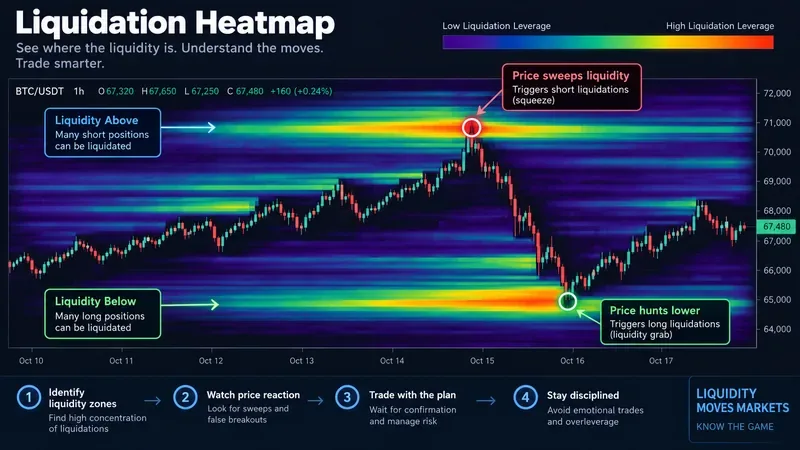
Perpetual-futures funding and open interest: help reveal whether a price move is supported by spot demand or mostly leverage.
Order-book depth and spreads: show whether actual market liquidity is improving or deteriorating.
These indicators should be read together. A Bitcoin rally accompanied by falling yields, a softer dollar, rising stablecoin balances, and moderate leverage is a different setup from a rally driven by rapidly increasing perpetual-futures open interest while the dollar and yields are rising.
The practical takeaway
Federal Reserve decisions matter for crypto because they change the economic value of holding dollars versus taking risk. Higher rates usually increase the reward for staying in cash-like assets and raise the cost of leverage. Lower expected rates usually reduce that hurdle and can make speculative assets more attractive. Stablecoins transmit part of this shift directly into crypto markets, while the dollar, Treasury yields, credit conditions, and institutional financing transmit it indirectly.
But the strongest framework is conditional, not binary. Ask four questions after every Fed meeting: Was the decision a surprise? Did the expected future rate path change? Are financial conditions actually easing or tightening? Is crypto-native liquidity confirming the macro move? If those answers line up, Fed policy can be a powerful explanation for crypto liquidity. If they do not, the rate decision alone is an incomplete signal.
Data and policy references in this article were checked on September 15, 2026. The September 15–16 FOMC meeting had not yet produced a new policy statement at the time of verification.