プルーフ・オブ・ワーク vs. プルーフ・オブ・ステーク:暗号通貨コンセンサス入門ガイド
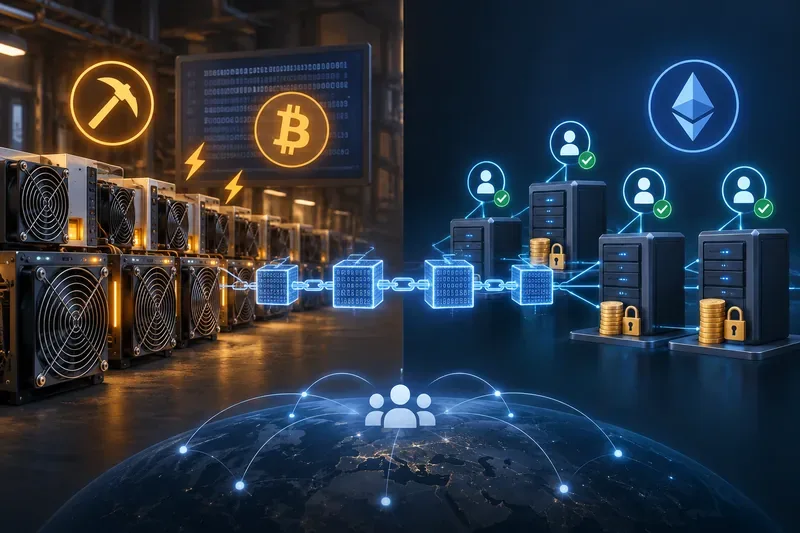
プルーフ・オブ・ワークとプルーフ・オブ・ステークがブロックチェーンにおける有効なトランザクションの合意にどのように役立つか、マイナーとバリデーターの違い、そして初心者が注意すべき点について学びましょう。
A large wallet buys a token, a dashboard calls it “smart money,” and social media immediately treats the transaction as a trading signal. That sequence looks simple, but several different kinds of information have been mixed together. The blockchain may verify that an address moved tokens. It usually does not verify why the transfer happened, who ultimately controls the address, or whether copying the trade will be profitable.
That distinction is the foundation of useful on-chain analysis. The goal is not to turn every large transaction into a prediction. It is to separate what is directly recorded on-chain, what an analytics provider has inferred, and what remains unknown. Once you do that, whale tracking becomes a research tool rather than a source of false certainty.
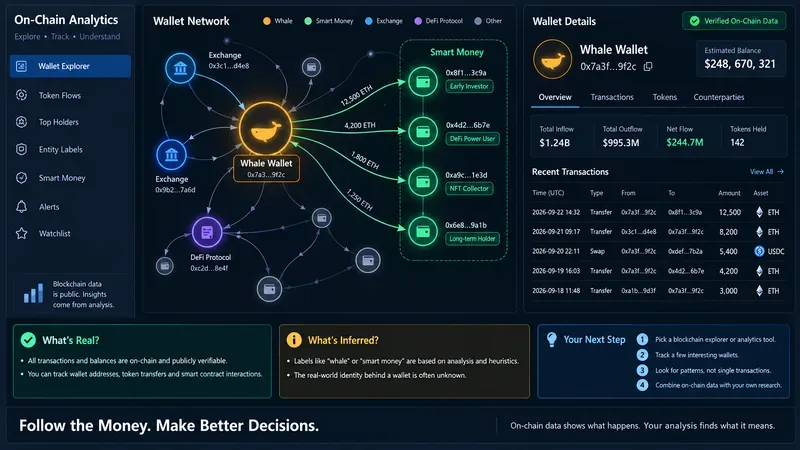
On-chain data is information recorded on a blockchain ledger. On Ethereum, for example, block explorers can expose transaction hashes, timestamps, sender and recipient addresses, token transfers, account balances, transaction history, contract interactions, and other execution data. Ethereum’s official documentation describes block explorers as interfaces to real-time blockchain data and notes that Ethereum is transparent by design. See Ethereum.org’s block explorer documentation.
Verified: if a finalized transaction shows that address A transferred 5,000 tokens to address B, that event can be checked independently against the chain.
Context-dependent: whether that transfer is a purchase, sale preparation, internal treasury movement, bridge operation, collateral transfer, market-maker inventory shift, or something else depends on the counterparties and smart-contract calls involved.
Unknown from the transfer alone: the owner’s motive and future action.
Action: when you see a dramatic wallet alert, open the transaction itself before reading commentary about it. Record the chain, transaction hash, token, amount, timestamp, sender, recipient, and contract interaction first.
A whale is generally a wallet or entity holding or moving a large amount of crypto relative to the asset or market being studied. There is no single universal balance threshold that makes an address a whale across every token and chain. A $10 million position may be enormous in one small-cap asset and routine for an exchange wallet in a large market.
Smart money is a different concept. Analytics services may use the term for traders or institutions that meet a provider’s performance or classification methodology. Nansen’s current API documentation, checked in September 2026, separates whale filtering from smart-money filtering and lists smart-money categories such as “Fund,” “Smart Trader,” and performance-window labels such as “30D Smart Trader.” Its documentation describes smart money as sophisticated participants that include institutional funds and historically profitable traders. See Nansen’s Smart Money documentation and Nansen’s core concepts.
Verified: a wallet’s balance, transfers, and contract interactions can be measured on-chain.
Provider-defined: whether a wallet qualifies as “smart money” depends on a particular labeling methodology, performance window, and dataset.
Not established: a large wallet is not automatically a skilled trader, and a historically profitable trader is not guaranteed to be profitable on the next trade.
Action: keep separate watchlists for “large holders” and “performance-labeled traders.” Do not merge them into one category unless you have evidence that a wallet meets both criteria.
One of the most common beginner mistakes is treating an address as if it were a named human brokerage account. On Ethereum, an account can be an externally owned account or a smart-contract account, and a wallet application is merely an interface for interacting with accounts. See Ethereum.org’s account documentation.
Real entities can also control many addresses. Exchanges may use deposit addresses, hot wallets, cold wallets, treasury wallets, and operational wallets. Funds and protocols may similarly spread activity across multiple accounts. This is why analytics platforms build entities: clusters of addresses believed to belong to the same organization or actor.
Arkham’s current API guide explicitly describes its model as entity-first and says attribution is confidence-scored rather than a binary claim. Its documentation also says labels evolve as new signals appear. See Arkham’s API guide.
Verified: each address has its own on-chain history.
Inferred: grouping multiple addresses into one real-world entity requires attribution research or heuristics.
Action: before drawing conclusions about a “whale,” check whether the address belongs to a known exchange, protocol, bridge, market maker, fund, custodian, or multisignature treasury. Entity context can completely change the meaning of a transfer.
Human-readable labels make blockchain data far easier to interpret, but they sit on top of the raw ledger. Nansen states that it assigns labels using research and heuristics, while Arkham uses structured entities, address labels, tags, and confidence-scored attribution. Arkham also distinguishes provider attribution from user-created private labels. See Arkham’s tagging-system explanation.
This matters because an unlabeled address is not necessarily unimportant, and a labeled address is not necessarily identified with absolute certainty. Some services distinguish high-confidence attributions from predictions or user-generated labels. Arkham has previously documented lower-confidence entity predictions separately from verified entities and notes that custom labels may be created by users. See Arkham’s entity-prediction explanation.
Verified: the address and its transactions exist on-chain.
Inferred: the real-world identity attached to that address may depend on evidence outside the blockchain.
Action: when identity matters to your thesis, check the label source, confidence status, and whether another reputable dataset independently reaches the same attribution.
Suppose a wallet is known to have been profitable in the past. The next useful question is not “Should I copy it?” but “What behavior produced that record?”
Review:
Nansen’s current smart-money API exposes categories such as holdings, DEX trades, net flows, historical holdings, and other wallet activity. Its methodology notes that historical holdings use historical daily prices rather than recalculating old balances using today’s prices, which is important when evaluating past behavior. See Nansen’s data methodology.
Action: inspect several months of history before treating a wallet as informative. One spectacular trade is a weak sample; repeated behavior across different market conditions is more meaningful.
取引所への資金流入は、保有者が売却準備をしている可能性があるため、しばしば弱気シグナルと解釈される。これはもっともらしい仮説ではあるが、唯一の説明ではない。資金は、担保、デリバティブ証拠金、内部リバランス、保管、マーケットメイク、店頭決済、あるいは運用上の理由など、様々な目的で取引所に送金される可能性がある。
Nansenのフローに関するドキュメントでは、取引所への資金流入を売り圧力の指標として、資金流出を蓄積シグナルとして用いており、それらを他の情報と相関させるパターンとして明確に位置づけています。Nansenのフローに関するドキュメントを参照してください。
検証済み:宛先属性が正しい場合、トークンは既知の取引所管理アドレスに入力されます。
状況によります。それは販売能力を高める可能性はありますが、実際に販売が行われたことを証明するものではありません。
行動:次のステップに進んでください。入金だけで判断せず、その後の取引活動、トークン残高の変化、DEX取引、表示可能な場合はデリバティブポジション、価格変動などを確認してください。
大規模な送金であっても、同じ主体が管理するウォレット間で資産を移動させるだけの場合もあります。取引所はホットストレージとコールドストレージのバランスを定期的に調整します。ファンドは保管契約間で資産を移動させる場合があります。プロトコルの財務部門はウォレットを再編成することがあります。したがって、単純な送金カウンターでは経済活動が過大評価される可能性があります。
エンティティ集約は、この問題を軽減するのに役立ちます。Nansenのホルダーツールは、関連するアドレスをエンティティごとに集約することができ、Arkhamはエンティティを、同じ組織または個人に関連付けられたアドレスのグループとして定義しています。
対応策: 2つの大規模アドレスが相互にやり取りする場合、両方が同一のエンティティに帰属しているかどうかを確認します。同一エンティティに帰属している場合は、実質的所有権の変更を示す追加証拠がない限り、そのイベントを内部送金として分類します。
ERC-20トークンの残高だけを見ていると、高度なウォレットが実際に行っていることを見落としてしまう可能性があります。資産は、レンディングプロトコルに預け入れられたり、流動性プールに供給されたり、ステーキングされたり、ブリッジされたり、ラップされたり、保管庫に保管されたり、レシートトークンで表されたりすることがあります。スマートコントラクトのやり取りは、単純な送金と同じくらい重要な場合が多いのです。
イーサリアムのトランザクションモデルには、トランザクションがコントラクトロジックを呼び出すための入力データフィールドが含まれており、エクスプローラーはトークン転送と並行してコントラクトのやり取りを公開できます。詳細は、Ethereum.orgのトランザクションに関するドキュメントを参照してください。
対策:トークンがウォレットから移動する際には、売却とみなす前に、送金先のコントラクトを特定してください。レンディングプロトコルへの入金は、取引所へのトークン送金とは経済的に異なります。
すべてのチェーン上のすべてのクジラを追跡しようとすると、ノイズが発生します。まずは、イーサリアム上のETHの活動や特定のトークンエコシステムなど、すでに理解している市場から始めましょう。
行動:小規模な調査対象群を作成する。1つのチェーン、1つのトークン、そしておそらく10~20個のアドレスまたはエンティティ。
分析ダッシュボードを使えば解釈は速くなりますが、基となるトランザクションはブロックチェーンエクスプローラーで検証できる必要があります。イーサリアムの公式ドキュメントには、アカウント、トランザクション、コントラクト、ブロック、トークンを調査するためのツールとしてブロックエクスプローラーが記載されています。
対策:重要と思われるすべてのイベントについて、アドレスとトランザクションハッシュのリンクを保存してください。
生のイベントが確認されたら、信頼できる分析データセットを使用して、誰がそのアドレスを管理している可能性があるか、また、そのアドレスに関連付けられている行動履歴は何かを調べます。
対応策:提供者、ラベル、可能であれば信頼度、および確認日を記録する。ラベルは研究メタデータとして扱い、不変の事実とはみなさない。
個々の取引は一点に過ぎませんが、ウォレットの履歴はパターンを示します。繰り返し発生する蓄積、分配、取引所の利用状況、DEXの挙動、プロトコル間の相互作用、そして実現された結果に注目してください。
対策:日付、ウォレット/エンティティ、取引、資産、金額、取引相手、解釈、信頼度、およびその後の結果を記載する列のあるシンプルなジャーナルを作成する。
複数の独立したウォレットが同時期に同じ資産に投資した場合、より強いシグナルが現れる可能性がある。しかし、その場合でも、共通の投資行動は、個々の確信に基づくものではなく、同じストーリー、インセンティブプログラム、マーケットメイキング戦略、あるいはトークンのロック解除を反映している可能性がある。
対策:少なくとも複数のウォレットを比較し、それらの取引が本当に独立しているかどうかを確認してください。
オンチェーンデータは、オンチェーンで何が起こったかを示します。ただし、トークンのロック解除、ガバナンス上の決定、権利確定スケジュール、OTC契約、マーケットメーカーの義務、法的制限、オフチェーンヘッジなどは明らかにならない場合があります。
行動:ウォレットのアクティビティを市場分析に活用する前に、プロジェクトの公式文書、ガバナンス提案、トークン配布情報、その他の一次情報源を必ず確認してください。
| 観察 | 状態 | 合理的に言えること | 想定してはいけないこと |
|---|---|---|---|
| DEXでトークンを購入するアドレス | 直接検証可能 | 当該アドレスは、記録された条件に基づいてスワップを実行した。 | オーナーは価格が上昇すると予想している |
| 住所には非常に大きな残高があります | 直接検証可能 | それは、あなたが選択したしきい値による主要な保有者です | 熟練した投資家です |
| 分析プロバイダーはこれを「スマートトレーダー」と呼んでいる。 | プロバイダー定義 | それはそのプロバイダーの方法論を満たしている | 将来の取引は好成績を収めるだろう |
| トークンはラベル付きの取引所ウォレットに移動する | 転送は確認済み。ラベルは帰属する可能性があります。 | 資金は取引所に関連付けられたアドレスに送金された。 | セールは間違いなく開催されました |
| 複数のアドレスが1つのファンドとしてグループ化されています | 帰属ベース | プロバイダーは、アドレスが管理権または所有権を共有していると考えている。 | このグループ分けは数学的に確実である。 |
| ウォレットが未知のコントラクトにトークンを転送する | 送金確認済み | 契約のやり取りは解読できる | 契約の動作が特定されるまでトークンは販売された。 |
たとえ精巧に構築されたスマートマネーのラベルであっても、避けられない限界は存在する。過去の収益性は戦略によって異なる場合がある。ウォレットはオフチェーンや別のプラットフォームでヘッジを行う可能性がある。そのリスク許容度は、あなたのものとは全く異なるかもしれない。ファンドは、個人トレーダーにはない流動性、資金調達、情報、または執行ツールにアクセスできる可能性がある。また、目に見えるウォレットは、より大きなポートフォリオの一部に過ぎない場合もある。
また、生存リスクも存在する。利益を上げた取引で有名になったウォレットだけに注目すると、そのようなパフォーマンスが事前にどれほど予測可能だったかを過大評価してしまう可能性がある。
行動:スマートマネーの活動を仮説生成ツールとして活用する。ウォレットが何を見ているのか、データに合致する代替説明は何か、そしてあなたの解釈が間違っていることを証明する証拠は何か、といったことを問いかける。
対策:投稿が緊急性を感じさせる場合は、処理速度を落としてください。見出しを鵜呑みにするのではなく、取引内容から主張を再構築してください。
ブロックチェーンは取引、残高、契約のやり取りに関する検証可能な記録を公開するため、オンチェーン分析は非常に強力です。しかし、生データを入手した後は、難しい部分が始まります。アドレスを誰が管理しているのか、複数のウォレットが同一の組織に属しているのかどうか、送金の意味、過去のウォレットのパフォーマンスが将来について何か有益な情報を示しているのかどうかなどを判断する必要があるのです。
初心者にとって最も効果的な習慣は、シンプルに「まず検証し、次にラベルを付け、最後に解釈する」ことです。クジラウォレットを追跡して、資金の流れと市場構造を理解しましょう。パフォーマンスラベル付きウォレットを追跡して、再現性のある行動を研究しましょう。しかし、ウォレットのサイズ、プロバイダーのラベル、または1回の大きな送金だけで、完全な取引理論を構築してはいけません。
リスクに関する注意:暗号資産市場は変動が激しく、オンチェーンでのアトリビューションは不完全または誤っている可能性があり、過去のウォレットのパフォーマンスは将来の結果を保証するものではありません。この記事は教育目的であり、個別の投資アドバイスを提供するものではありません。
プルーフ・オブ・ワークとプルーフ・オブ・ステークがブロックチェーンにおける有効なトランザクションの合意にどのように役立つか、マイナーとバリデーターの違い、そして初心者が注意すべき点について学びましょう。
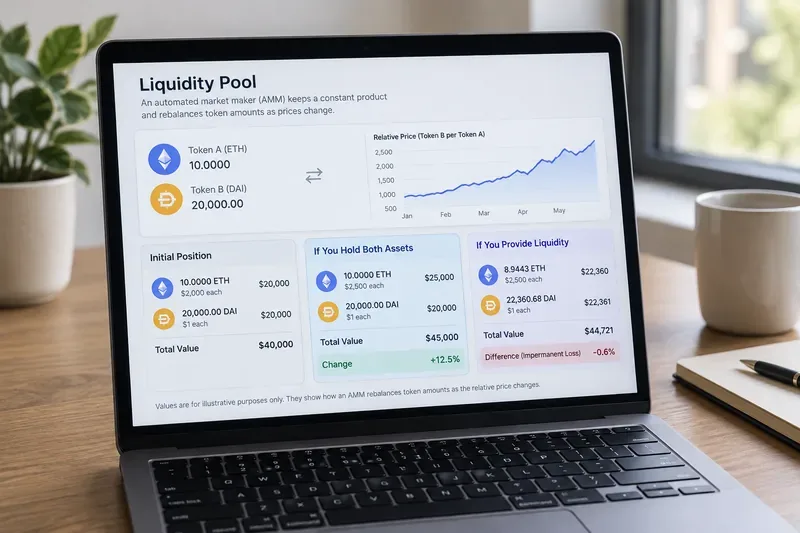
流動性を提供する前に、インパーマネントロスとは何か、AMM流動性プールがなぜインパーマネントロスを生み出すのか、手数料がリターンにどのように影響するのか、そしてリスクを軽減するための実践的な方法について学びましょう。
Learn why crypto crashes trigger bad decisions, which HODLing myths to avoid, and how to build a disciplined plan for volatility without blindly holding forever.
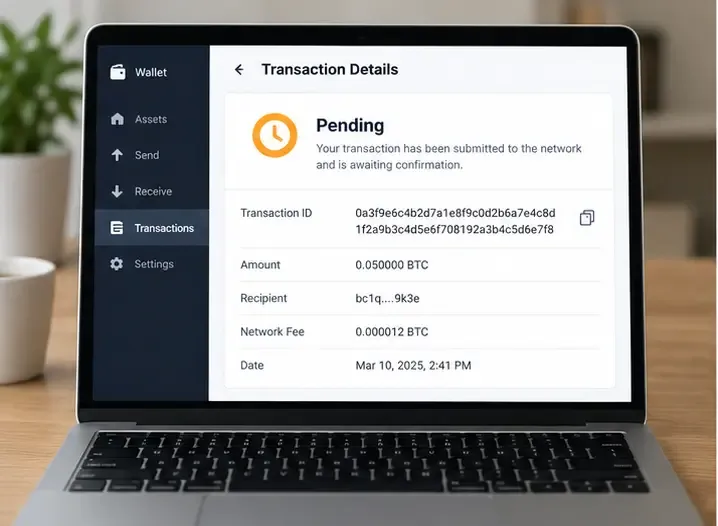
仮想通貨の送金が保留中ですか?混雑状況の確認方法、トランザクションハッシュの確認方法、待機と再送金のどちらを選択するか、そして高額な損失につながるミスを回避する方法を学びましょう。
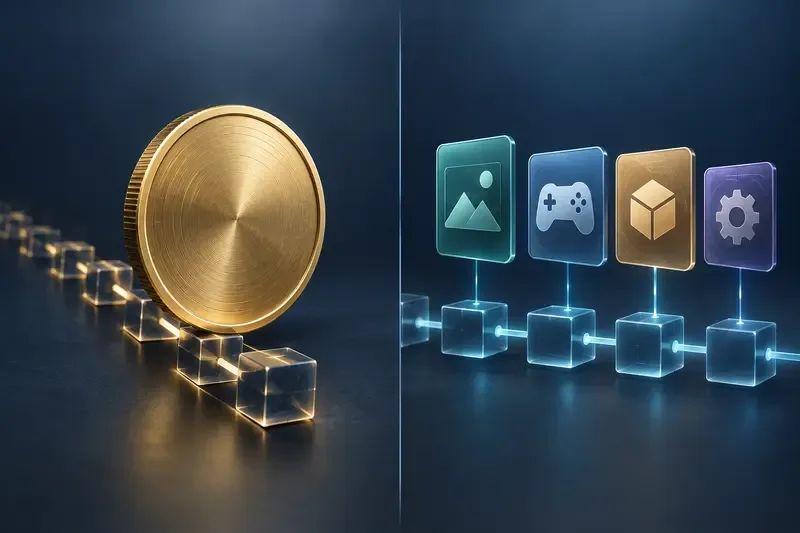
仮想通貨コインとトークンの違い、ネットワーク所有権、手数料、セキュリティ、管理体制、ユースケース、そしてそれぞれの資産がどのようなニーズに適しているかなどについて学びましょう。
リスク許容度、投資期間、分散投資、保管、流動性、リバランスといった要素に基づいて、万能な公式に頼ることなく、暗号資産をどのように配分するかを学びましょう。
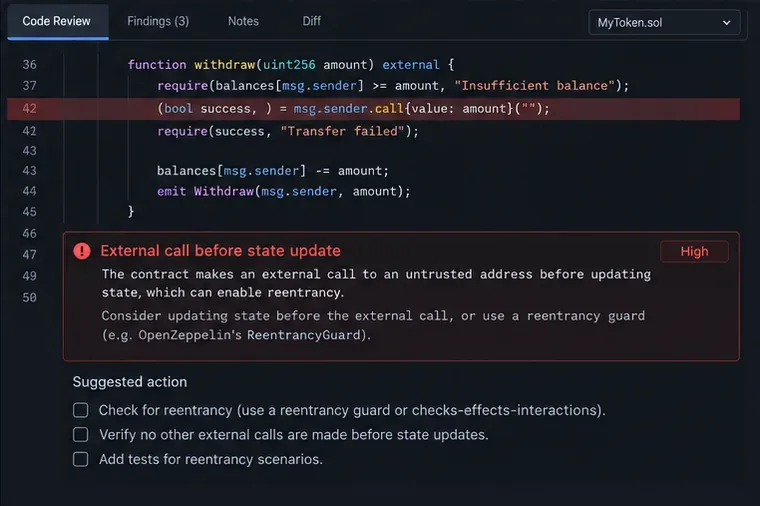
暗号資産プロジェクトのスマートコントラクトを監査する方法を、デプロイメントとマッピング権限の検証から、ロジック、アップグレード、修正のテストまで、段階的に学びましょう。
リスクを最優先とする枠組みに基づき、資産配分、資産選択、保管、購入規律、リバランス、記録管理、詐欺回避などを行い、長期的な暗号資産保有ポートフォリオを構築しましょう。
Learn how to read on-chain data, track whale wallets, evaluate smart-money labels, and separate verifiable blockchain facts from inference before acting on wallet activity.
仮想通貨先物取引プラットフォームで「証拠金不足」エラーが表示される理由、原因の特定方法、安全な修正方法、そして次の取引を行う前に証拠金問題を回避する方法を学びましょう。